
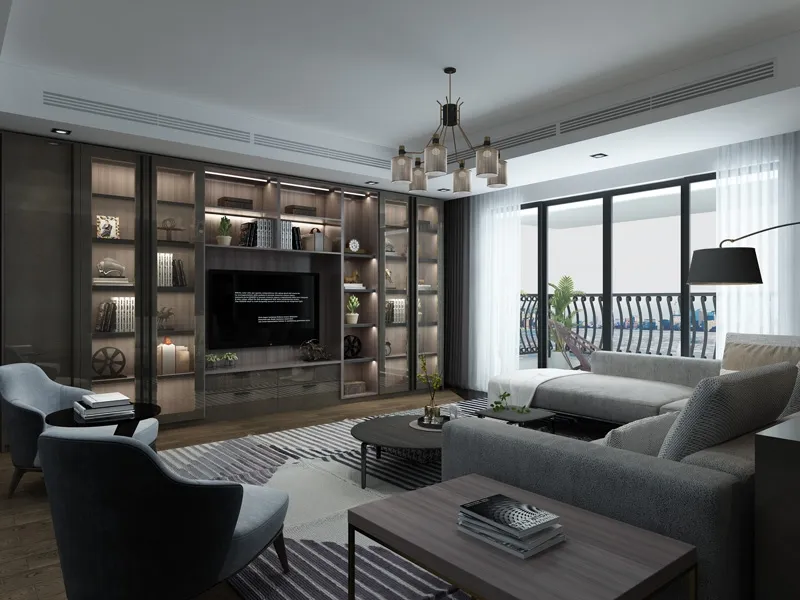
Picture this: you're cozied up on your sofa after a long day, remote in hand, ready to dive into your favorite show. As your eyes settle on the entertainment center, have you ever noticed how that sleek glass surface transforms your living space? In today's interior design landscape, glass isn't just a functional material - it's the secret sauce that turns ordinary TV cabinets into conversation starters.
Remember those bulky wooden cabinets that dominated living rooms in the 90s? They practically shouted "I'm heavy and permanent!" Modern designs whisper something entirely different: "I'm light, airy, and sophisticated." That transformation comes courtesy of glass elements that create visual breathing room in our increasingly compact living spaces.
The magic happens through three core principles:
1) Light choreography - glass plays with natural and artificial light like a prism
2) Spatial illusions - transparent surfaces visually expand small rooms
3) Material contrast - pairing glass with wood or metal creates tactile tension
That morning sun hitting your glass cabinet doors? It's not just pretty - it's saving you electricity. Glass surfaces bounce natural light around rooms like pinballs, reducing the need for lamps during daytime. Measurements show rooms with glass-front cabinets require 20-30% less artificial lighting than those with solid wood units.
Ever opened a wooden cabinet door to discover a dust bunny colony having a party? Glass-front units create a protective barrier while still showcasing your media equipment. For allergy sufferers, this is game-changing - studies show enclosed glass storage reduces indoor dust accumulation by up to 45% compared to open shelving.
Here's where engineering meets elegance: modern glass TV cabinets hide the dreaded "cord spaghetti" without blocking remote signals. The trick? Strategically placed cable channels along the tempered glass edges combined with magnetic access panels that technicians love and interior designers adore.
The real showstopper in contemporary glass cabinet design? The marriage of beauty and responsibility. Unlike the disposable furniture culture of the past, today's glass elements champion eco-friendly building materials that leave minimal environmental footprints.
Manufacturers now use recycled glass content ranging from 40-90% in cabinet components. And get this - when you choose tempered glass over traditional materials, you're reducing carbon emissions by approximately 30kg per square meter based on lifecycle analyses. That's equivalent to driving 75 miles in a standard sedan!
What happens to your TV cabinet after 10-15 years of service? Wood units often end up in landfills, but glass cabinets get a second act. Tempered glass is 100% recyclable without quality degradation - it can be crushed and reborn as countertops, flooring, or even new furniture panels. It's the circular economy working behind the scenes while you binge-watch your favorite series.
The true artistry emerges when glass meets other materials in unexpected ways:
Warm oak frames embracing cool glass panels create visual temperature play. The trick? Match wood grain directions with glass textures - vertical grains paired with ribbed glass create stunning rhythmic patterns.
Thin brass inlays along glass edges catch light like jewelry. Industrial designers call this "functional decoration" - those metallic lines actually reinforce the glass while adding luxe details.
Marble or granite bases give glass cabinets gravitational presence. This pairing solves the "floating furniture" problem in minimalist spaces, anchoring units without visual heaviness.
The next generation of glass TV cabinets isn't just sitting pretty - it's getting smarter:
That gorgeous floating glass cabinet requires some special handling. Pro installers share these trade secrets:
"Always account for 'glass wiggle room' - leave 1/8" expansion gaps that disappear with silicone. And here's a ninja trick: apply anti-static spray during installation to drastically reduce dust attraction during the first critical weeks."
For mounting, specialized glass clamps distribute weight evenly without creating pressure points. The sweet spot? Three contact points minimum for anything wider than 48 inches.
Why do we feel differently in rooms with glass elements? Neuroscience offers fascinating clues:
University studies show transparent furniture lowers cortisol levels by creating perceived spatial expansion. Participants reported 28% lower stress scores in rooms with glass elements versus solid furnishings.
Our brains process transparent objects as "less permanent" creating mental flexibility. This explains why rooms with glass cabinets feel more adaptable to change.
So next time you're designing your entertainment space, remember: that glass TV cabinet isn't just holding your electronics - it's shaping your state of mind. By blending light, space and sustainability, it creates environments where technology serves us without dominating us.
Worried about fingerprints? Modern glass technology laughs at smudges:
Pro tip: Use distilled water with a splash of vinegar for streak-free shines. Avoid commercial cleaners with ammonia that can degrade coatings over time.
Considering a glass-front TV cabinet? Here's your action plan:
Account for ventilation gaps around electronics - measure your largest component then add 2" clearance space all around. Don't forget cable exit points!
Position cabinet lighting 30 degrees off-center to prevent glare on screens. LED strip placements should highlight collectibles without washing out your TV picture.
Choose door styles based on frequency of access - hinged for daily use, sliding for tight spaces, and magnetic touch-open for premium seamless looks.
With transparent design, you're not just choosing furniture - you're curating an experience. So let your TV cabinet frame not just your entertainment system, but your design philosophy too.
Recommend Products












