


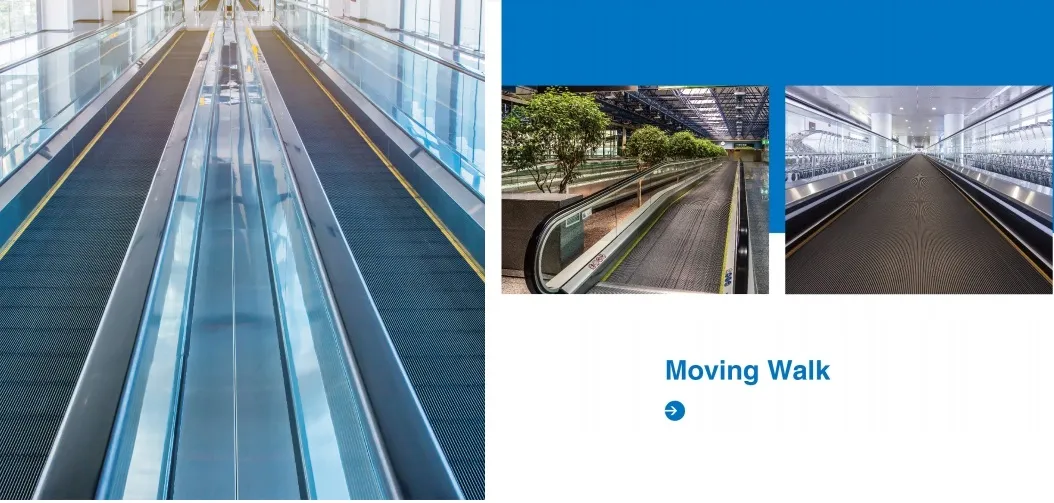
Protecting People and Ensuring Smooth Operations During Challenging Seasons
Understanding the Seasonal Challenge
Let's talk about something we've all experienced - stepping onto a moving walkway during rainy or snowy weather only to feel your foot slide uncomfortably. That moment of panic isn't just unpleasant; it's downright dangerous. Moving walkways in airports, shopping centers, and transit hubs transform into genuine hazards when precipitation enters the equation.
Seasonal weather isn't just about temperature changes; it radically alters the physics of walking surfaces. Water reduces friction by about 50% while snow creates uneven traction zones - a perfect recipe for slips, trips, and falls. For building managers and facility operators, rainy and snowy seasons become months of high anxiety as walkways turn from helpful conveniences to liability nightmares.
The consequences go beyond individual accidents. A single fall can cascade into operational disruptions: delayed flights due to passenger injuries, congested pathways creating bottlenecks, damage claims, regulatory fines, and tarnished reputations. In industrial settings where moving walkways transfer materials, weather-related accidents can halt production lines entirely.
Proactive Surface Defense Systems
Imagine walking into an airport during a snowstorm and seeing completely clear moving walkways. This isn't magic - it's strategic surface management. The first line of defense against slippery conditions involves surface treatments that literally change how water behaves:
Thermal Solutions: Embedded heating elements have evolved far beyond basic resistance wires. Modern systems use self-regulating polymer technology that activates when temperatures drop below 40°F (4°C). Zones near entry points operate at higher temperatures to rapidly melt incoming precipitation, while mid-sections maintain temperatures just above freezing for efficiency. The beauty? These systems reduce energy consumption by up to 60% compared to older constant-heat models.
Micro-Textured Surfaces: Cutting-edge walkways now feature laser-engraved patterns invisible to the naked eye but creating thousands of microscopic friction points. These aren't just randomly placed - computer modeling determines optimal patterning based on foot traffic flow, shoe types, and common gait patterns. Like tire treads channeling water away, these micro-grooves redirect moisture before it can create hydroplaning conditions.
Chemical-Free Nano-Coatings: New hydrophobic sealants create water-hating surfaces at the molecular level. When a raindrop hits, it forms nearly perfect spheres that roll away instead of spreading out. The slick part? These treatments last 3-5 years without reapplication, making them cost-effective despite higher initial investment. For locations where environmental regulations prohibit de-icers, they're game-changers.
Smart Detection & Response Technologies
Old-school safety meant someone periodically checking walkways - an approach riddled with gaps during rapidly changing weather. Modern systems constantly monitor conditions using layered technology:
Integrated Weather Stations: Small sensors mounted along walkways do more than measure temperature. They detect dew formation before it becomes visible to the eye, sense ice-crystal formation within snowflakes, and calculate friction coefficients in real time. Data feeds into building management systems that can trigger countermeasures automatically.
Predictive AI Analytics: Machine learning algorithms consume historical weather data, real-time feeds, and incident reports. The systems don't just react to current conditions - they forecast slippery conditions 20-60 minutes before they occur. At Boston Logan Airport, such systems activate pre-treatment protocols before storm cells even arrive.
Responsive Speed Controls: This is where engineering meets practicality. During precipitation events, walkways automatically slow by 15-25%. While counterintuitive, studies prove this significantly reduces falls by giving users more adjustment time. The systems gradually return to normal speed when conditions improve without requiring manual intervention.
Emergency Braking Systems: Developed from elevator safety technology, these mechanisms can stop a walkway in under two seconds if sensors detect a pile-up incident in progress. Gentle enough not to cause additional falls but fast enough to prevent crushing injuries.
Human-Centered Safety Designs
Technology means nothing if humans don't interact with it correctly. Effective seasonal safety requires designing for human psychology and physiology:
Intuitive Warning Systems: Forget small icons - modern installations use tiered lighting systems. Subtle blue edge lighting indicates potential caution when moisture is detected, escalating to pulsating amber strips when friction drops below safe thresholds. Audio cues complement visuals with localized voice warnings - not blaring alarms, but calm, directional notices: "Caution: wet surface ahead."
Strategic Handrail Engineering: Handrails aren't just grab bars anymore. In winter conditions, they provide continuous, gentle warmth (maintained at about 70°F/21°C) to keep hands responsive. Ergonomic research optimized placement - slightly higher than traditional rails to accommodate people wearing bulky coats, with tactile surface indicators every 18 inches for subconscious grip reassurance.
Entry Zone Tactics: Transition areas where wet shoes meet walkways receive special attention. Patterned "splash zones" use drainage textures to pull water away immediately. Gentle downward airflow creates an invisible curtain that evaporates droplets before they accumulate. For critical applications like hospital walkways , antimicrobial surfaces prevent microbial growth in constantly damp conditions.
Footwear-Friendly Approaches: Different shoe types require different solutions. Areas near high-heel stores incorporate narrow-gap designs to prevent heel catches. Industrial walkways feature debris-clearing bristles along edges that automatically dislodge ice chunks or gravel before they cause falls.
Operational Protocols That Actually Work
Even the best technology fails without proper operational procedures. What separates effective programs from compliance paperwork?
Condition-Response Matrix: Successful facilities abandon vague "check walkways during inclement weather" instructions. Instead, they implement precise action charts: When moisture sensors detect X for Y minutes, technician Z must perform A-B-C checks. These aren't suggestions - they're trigger points with automated task assignments sent to maintenance tablets.
Passive De-Icing Strategies: Chemical de-icers create residue problems while environmental regulations tighten. Advanced facilities now use passive systems like capillary mats beneath surfaces - hydrophilic layers that wick moisture away faster than it accumulates. Others employ piezoelectric vibration - barely perceptible high-frequency shaking that prevents ice crystal formation. These "do nothing" approaches often outperform active methods.
Staff Training Evolution: Training moved beyond classroom sessions to augmented reality simulations. Technicians troubleshoot virtual ice buildup scenarios using digital overlays on actual equipment. Customer service staff practice guiding groups safely during simulated storm conditions. The training secret? Make it scenario-based rather than theoretical.
Data-Driven Auditing: Modern compliance uses predictive analytics rather than checklists. Instead of "inspect walkway daily," systems track: How does friction decay correlate with temperature drops? What footwear patterns appear during different precipitation types? These metrics constantly refine safety approaches rather than simply proving compliance.
Weather-Ready Infrastructure
Seasonal challenges require all-season thinking during design and installation phases:
Modular Design Philosophy: Tomorrow's walkways embrace modularity - sections designed for easy replacement and technology upgrades without full system shutdowns. Components feature standardized interfaces so new friction strips or sensor arrays integrate seamlessly. At Minneapolis-St. Paul airport, this approach enabled complete winterization upgrades across concourses during overnight shifts.
Enhanced Drainage Architectures: Modern installations treat drainage as a primary design consideration rather than an afterthought. Subsurface channels run parallel to walkways with gentle gradients, using the motion of the walkway itself to propel water toward collection points. Strategic openings where rain hits hardest include redundant drainage paths to prevent overwhelming single points.
Material Resilience: Today's premium walkways use specialized composites that maintain consistent friction properties across extreme temperatures (-20°F to 120°F). Unlike metals that become brittle in cold, these materials demonstrate remarkable impact resistance during freeze-thaw cycles. For coastal regions, the formulations resist salt-induced corrosion without slippery coatings or treatments.
Beyond the Walkway: Holistic Safety
A weather-safe moving walkway doesn't exist in isolation - it's part of an ecosystem:
Transition Zone Safety: Most incidents occur within three steps of boarding or exiting. Well-designed buffer zones feature anti-slip materials like textured stainless steel or epoxy aggregates that outperform traditional rubber mats. Lighting designs eliminate dangerous glare-dark transitions that cause missteps during precipitation. Canopy extensions protect boarding areas while maintaining architectural aesthetics.
Cleaning Chemistry: Cleaning protocols undergo radical reevaluation during inclement seasons. Facilities switch to friction-enhancing detergents and eliminate shine-enhancing polishes that become dangerously slippery when wet. Application frequency adjusts automatically based on pedestrian counts - more traffic means more cleaning, not less.
Contingency Operations: Effective weather plans include measured responses rather than all-or-nothing closures. Tiered protocols include slowing speeds before stopping completely, with decision thresholds determined by actual hazard levels rather than perceived ones. Strategic closure zones isolate only the most hazardous sections while maintaining partial functionality.
Cost-Effective Implementation Strategies
Budget constraints shouldn't compromise safety. Effective programs maximize resources:
Phased Retrofitting: Rather than waiting for complete overhauls, leaders tackle hazards in priority sequences: First entry transition zones where falls prove most consequential. Next, critical friction areas midway where lost footing prevents recovery. Finally, general surface treatments. Each phase delivers measurable benefits while spreading costs.
Performance Partnerships: Progressive facilities use outcome-based maintenance contracts - vendors get bonuses when seasonal incident rates drop below targets. Instead of paying for services rendered, payment depends on measurable safety improvements. This ensures suppliers stay invested in results, not just maintenance hours.
Data Monetization: Smart systems generate valuable data - traffic flow patterns, material durability metrics, climate interactions. Savvy operators license anonymized data to manufacturers or research institutions, offsetting program costs. One major airport generates enough revenue from walkway usage data to fully fund its winter safety program.
Building User Awareness Without Annoyance
Safety communication that works respects users' attention:
Behavioral Nudges: Instead of generic warnings, systems deploy context-aware messages. Signs illuminate only when precipitation is detected nearby: "Caution: wet shoes create slippery conditions." Messages appear precisely where behavior needs changing - near boarding points when surface friction drops below safe thresholds.
Multilingual Voice Guidance: Recorded messages don't cut it in global transit hubs. AI-powered systems provide real-time translated alerts matching the languages currently detected in the area. The system detects conversations in Spanish? It provides Spanish warnings.
Pattern Interruption Tactics: People stop noticing consistent warnings. Effective programs introduce variability - different message framings, occasional visual surprises, and reward messages: "99% of travelers made this transfer safely today." Brief acknowledgements prove more effective than constant scolding.
Positive Reinforcement Systems: Advanced programs track safe behaviors - a thermal camera counts people using handrails properly, triggering occasional "Safe riding!" messages and even discount offers in nearby shops. Small rewards encourage continued safe habits beyond just the walkway.
Embracing Future Innovations
The future of moving walkway safety holds remarkable possibilities:
Self-Healing Surface Technology: Materials science offers polymer composites containing microcapsules that release friction-enhancing particles when abrasion occurs. Scratches that normally create slippery zones instead create enhanced grip zones. The materials gradually renew their protective qualities without manual intervention.
Predictive Friction Mapping: Combining millimeter-wave radar with thermal imaging creates real-time friction maps, identifying developing trouble spots before incidents occur. Maintenance teams get directed precisely where needed rather than patrolling entire systems.
Adaptive Surface Textures: Emerging technologies allow surfaces to physically reconfigure based on conditions - developing aggressive peaks during ice events that automatically retract when conditions improve. The science fiction of shifting surfaces becomes weather-ready reality.
Digital Twin Simulation: Virtual replicas allow operators to model weather impacts on new designs before construction begins. They simulate snow loads, ice accumulation patterns, melt rates, and pedestrian interactions under thousands of climate scenarios, preventing real-world learning experiences.










