
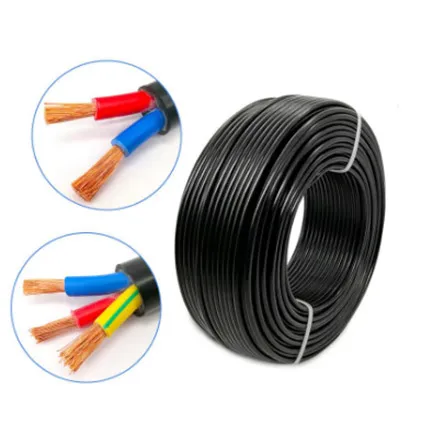
Let's be honest – rats and ants are nature's ultimate demolition crew. While we humans struggle to open stubborn packaging, these critters chew through industrial-grade cables like they're snack time. It's a multi-billion dollar headache for industries worldwide. What makes traditional cables so vulnerable? That brittle plastic sheath we've relied on for decades is basically an invitation saying "Free Buffet Here!"
Imagine underground power lines becoming rodent playgrounds, or server rooms hosting ant colonies snacking on fiber optics. Real-world examples show this isn't hypothetical. A major Asian airport once faced runway lighting failures during night operations. The culprit? Rats treating electrical conduits like their personal noodle bowls. And let's not forget the Southeast Asian data center that experienced repeated outages – tracing back to tiny ants compromising millimeter-thin protective layers.
What these incidents reveal is clear: traditional cable designs lack strategic defense. We're not just fighting teeth and mandibles; we're up against relentless biological determination. The breakthrough comes when we stop seeing pests as nuisances and start designing like they're specialized demolition experts, because frankly, they are.
Chemical engineering has become cable defense's secret weapon. Forget simple physical barriers – today's cutting-edge sheaths work like botanical bouncers. Take capsaicin, the compound that gives chili peppers their kick. Infused into cable material at molecular concentrations, it triggers pain receptors when rodents bite down. It's not poison – just nature's "no vacancy" sign telling pests to dine elsewhere.
Capsaicin microcapsules create instant discomfort without harming wildlife. Rodents learn fast: these cables equal pain, that burrow equals safety. Behavior modification through material science.
Organophosphate compounds disrupt ant pheromone trails, making cables "invisible" to scout ants. No scent trail means no colony feast. It's chemical camouflage.
High-Density Polyethylene (HDPE) forms the backbone, enhanced with UV-stabilized cross-linking. Think spider silk meets Kevlar – flexible but absurdly bite-resistant.
But innovation doesn't stop there. Recent trials with bark extracts from Malaysian ironwood trees show promise. Termites avoid this wood naturally, and early lab tests reveal similar protective effects when compounds are integrated into sheath matrices. It's biomimicry at its finest – stealing nature's pest deterrents to protect human infrastructure.
Material science is half the battle; structural intelligence completes the defense. Consider layered architecture mimicking geological formations:
This isn't just stacking materials; it's behavioral warfare. Rats encountering these cables experience immediate aversive cues: confusing textures, unpleasant taste, and neurological discouragement. Field tests in Brazilian sugarcane fields saw rodent abandonment of cable routes within 48 hours – zero attrition, pure aversion.
Not all cables face the same threats. Suburban infrastructure battles squirrels and raccoons, while tropical installations face ant armies. Specialized designs address these varied combat zones:
Extra-thick sheathing with enhanced UV resistance for aerial installations. Temperature-stable deterrents withstand desert heat to arctic cold.
Ribbed exteriors preventing grip plus dual-compound diffusion: capsaicin for rodents, borax derivatives for termites. Burial depth irrelevant.
Low-smoke zero-halogen (LSZH) versions with chem-signal disruptors for factory environments where fire safety and pest resistance must coexist.
The power cables in modern installations now do double duty – conducting energy while projecting force fields against biological threats. Urban installations in rat-prone cities like New York show 76% fewer rodent incidents after upgrading to these smart materials.
Meeting GB/T 34016 and IEC 60502 standards isn't just paperwork – it's survival assurance. Rigorous lab testing simulates years of chewing pressure, temperature cycling, and chemical exposure. But modern protective designs go beyond compliance:
Environmental safety parameters exceed REACH regulations. Capsaicin-release mechanisms activate only on bite pressure, preventing soil contamination. All deterrent compounds are biodegradable within 18 months if sheathing is compromised. This represents a huge leap from the chromium-based solutions of the 1990s that created secondary pollution problems.
Installation flexibility matters too. Unlike old cable types requiring special conduit armor, modern rodent/ant-resistant cables maintain standard bending radius (15x diameter) while meeting fire-retardancy certifications like IEC 60332. It's protection without compromise or complication.
The frontier lies in adaptive materials. Research at Singapore's Materials Science Institute reveals fascinating possibilities:
Sheathing with pH-responsive polymers detecting saliva enzymes, releasing precise deterrent doses only when attacked
Capsule-embedded polymers filling minor breaches automatically, maintaining barrier integrity between major inspections
What we're witnessing is an arms race turned elegant. Instead of fighting nature, we're learning from it and designing smarter defenses. The future protective infrastructure combines material intelligence with behavioral science – cables that don't just withstand attack but actively deter it through multi-sensory disruption.
For industries tired of playing whack-a-mole with cable-destroying pests, these advanced solutions finally offer durable, ethical, and maintenance-friendly protection – turning vulnerable conduits into no-go zones for nature's engineers.
Recommend Products












