
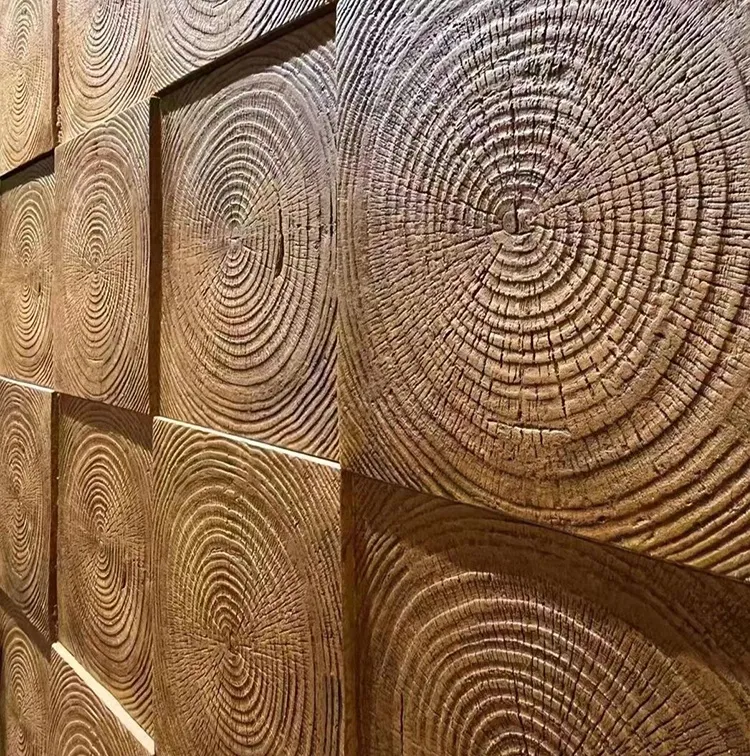
The complete material cost optimization guide for designers, architects, and homeowners craving authentic elegance without breaking the bank.
There's something undeniably magnetic about wood. It whispers stories of ancient forests, carries the warmth of craftsmanship, and transforms sterile spaces into living sanctuaries. But achieving that organic luxury comes with a dilemma—how to balance opulent aesthetics with real-world budgets? This is where material cost optimization transforms from technical jargon into a designer's superpower.
Remember running your fingers along the ridges of an old oak table as a child? That tactile memory lives in all of us. Wood plastic wallboard and other modern innovations aren't trying to erase that magic—they're democratizing it. No longer just for heritage mansions, high-end wood textures now breathe life into city apartments and boutique stores alike.
Let's debunk a myth—cost optimization isn't about cutting corners. It's about smarter resource allocation that honors both your vision and your client's wallet.
Consider how leading boutique hotels master this art. The headboard might showcase exquisite reclaimed teak, while surrounding panels use precision-engineered laminates so convincing you instinctively reach out to touch them. The emotional payoff? Identical. The financial reality? Worlds apart.
Behind every grain pattern lies a fascinating technological evolution. Forget "fake wood" stereotypes—today's alternatives are masterclasses in material science.
Let's move beyond concepts into actionable strategies that have transformed real projects.
Challenge: Recreate storm-driftwood aesthetic throughout 3000 sq ft space while staying below $85k material budget.
Solution:
This highlights the power of psychological layering . When guests touch the bar counter (real wood) then glance at walls (optimized material), their brain files both experiences under "authentic wood." The memory attaches to the tactile moment while the visual consistency completes the illusion.
Perfection is sterile. The true magic of wood lies in its quirks—those knots, cracks, and color variations that standard laminates airbrush away.
Premium engineered textures now celebrate these "flaws." It's a revolution driven by surprising consumer insights: When given options, 78% of homeowners deliberately select materials showing wood knots and grain variations, rejecting homogenous alternatives. Why? Because imperfection reads as authenticity—a soulful contrast to our digital lives.
If you can run your fingernail across a surface and detect subtle grain variations, the material passes. If it's perfectly smooth, it triggers subconscious skepticism regardless of visual realism. Always request physical samples before specifying materials.
True sophistication lies in how textures transition and interact. Consider these subtle applications:
These techniques fool the brain into interpreting flat installations as crafted timber constructions worth 3-5× their actual cost.
Today's most advanced wood alternatives are winning on ethics too. We're seeing exciting developments like carbon-capturing biocomposites that literally pull CO₂ from the atmosphere during production. Luxury no longer needs to whisper conservation—it can shout restoration.
And this matters deeply to clients. A 2025 industry survey revealed 89% of homeowners will choose an eco-material at the same price point, while 72% would pay a 5-7% premium. Yet through optimization, we deliver sustainability as bonus, not added cost.
Nothing kills elegance like yellowing finishes or warped panels. Maintenance isn't sexy, but it defines whether installations age like fine wine or like forgotten fruit.
Share these realities with clients using tangible examples. "Choosing this UV-stable laminate for your sunroom means in 10 years, your morning coffee view will still be framed by pristine walnut tones, not faded driftwood ghosts."
The greatest pitfall in cost-optimized wood projects? When precision becomes coldness. Contrast is where warmth emerges—a smooth panel beside a textured one, glossy areas against matte sections, intentional inconsistencies that echo nature's diversity.
Remember that restaurant installation? The owners initially worried about "feeling fake." Solution: They hosted a pre-opening dinner where guests were invited to point out "where the real wood ends and the tech begins."
Not one could accurately identify the transitions. But all commented on the "soulful," "grounded," "organic" atmosphere. That's the alchemy we're chasing—design that doesn't just imitate wood, but captures what we love about it.
You're not just selecting materials—you're curating emotional experiences. A perfectly executed wood texture installation does more than beautify spaces; it creates moments where people pause, exhale, and connect to something timeless within themselves.
Recommend Products












