


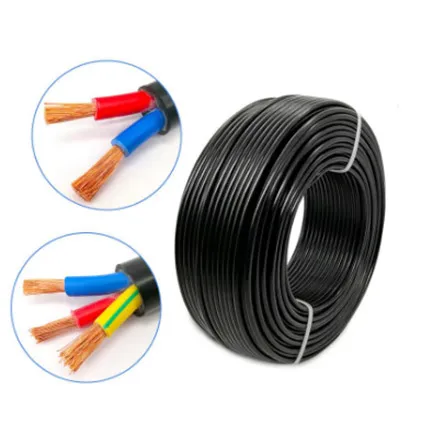
A comprehensive guide blending technical specifications with practical installation insights
Choosing power cables isn't just about connecting point A to point B—it's about building electrical arteries that keep systems alive safely and efficiently. The wrong choice? That's like wearing flip-flops to hike Mount Everest. Today, we'll walk through the critical factors electrical engineers consider when specifying low-voltage (LV) and medium-voltage (MV) power cables for industrial, commercial, and utility applications.
This guide distills insights from academic research and field experience into actionable knowledge. We'll focus on real-world tradeoffs: copper versus aluminum, XLPE versus PVC, armored versus unarmored—and why these choices matter more than you might think.
1. Voltage Considerations: Matching System Needs
The relationship between system voltage and cable rating boils down to this equation:
V = √3 V 0
Where V represents phase-to-phase voltage and V 0 indicates conductor-to-ground voltage. International Electrotechnical Commission (IEC) categorizes systems for precise specification:
| Category | Fault Clearance Time | Cable Voltage Recommendation |
|---|---|---|
| Category A | < 1 second | Match system voltage |
| Category B | 1-8 hours | Match system voltage |
| Category C | > 8 hours | Exceed system voltage |
For industrial plants with unreliable fault protection, opting for higher-rated cables provides a critical safety buffer.
2. Current Handling: Thermal Dance of Conductors
Every cable has its thermal comfort zone. Exceed it, and insulation degrades prematurely. Three key elements control this dance:
Material Matters
Copper isn't just shinier—it outperforms aluminum by 20-30% in current capacity for equivalent sizes. But aluminum's conductivity-to-weight ratio makes it attractive for long overhead spans.
Insulation Performance
XLPE insulation withstands higher temperatures than PVC. Imagine 90°C operation instead of 70°C—that's like adding extra lanes to a highway without widening the road.
3. Voltage drop: The Silent System Killer
That harmless-looking voltage drop (measured in mV/A-m) can starve motors and dim lights at the end of long runs. Consider:
- Motors experiencing 5% voltage drop lose 10-15% torque and overheat
- LED lighting becomes unstable below 90% nominal voltage
- Solution: Upsize conductors or reduce circuit length
Smart engineers always calculate voltage drop before installation—not after users complain about performance issues.
4. Short-Circuit Resilience: Planning for Disaster
When systems fault, cables must survive the temporary inferno. Key considerations:
Duration Matters
Can your cable withstand 15kA for 0.5 seconds? That's like asking if a soda can can handle a sledgehammer—specification sheets detail these ratings.
Coordination Principle
Match cable withstand ratings to protective device clearing times. Your breaker should act before the cable insulation fails—this isn't a relay race where second place is acceptable.
5. Physical Constraints: Bend Radius and Armoring
| Cable Type | Minimum Bend Radius | Installation Notes |
|---|---|---|
| PVC Multi-core | 12x diameter | Easier to pull through conduits |
| XLPE Multi-core | 15x diameter | Stiffer but handles higher temps |
| Single-core MV | 20x diameter | Require trefoil arrangement |
Armored cables add mechanical protection but introduce grounding complexities. Unarmored cables need protected pathways like cable trays.
6. Environmental Factors: Beyond the Datasheet
The perfect cable in a lab fails in harsh reality. Consider:
- Chemical exposure: Oil refineries need oil-resistant jackets
- UV resistance: Outdoor installations demand sunlight-resistant materials
- Rodent protection: Armored cables or metallic conduits in infestation areas
- Moisture: Minedump areas benefit from water-blocking designs
7. Lifecycle Considerations: Future-Proofing
Scalability
Will this circuit need 30% more capacity in five years? Factor future load growth.
Maintenance Reality
Salt-spray environments require accessible terminations for cleaning and inspection.
End-of-Life Planning
Newer XLPE cables last 40+ years—ensure replacements match expected facility lifespan.
Eco-Impact
Copper has higher recyclable value but higher initial environmental footprint.
Putting It All Together
Specifying power cables isn't checklist engineering—it's balancing technical parameters with real-world constraints. Remember:
- Prioritize safety: Voltage rating and short-circuit capacity are non-negotiable
- Evaluate total lifetime cost, not just purchase price
- Consider future maintenance during installation design
- Document assumptions for future upgrades
Proper cable selection ensures systems operate reliably for decades. While technical specifications provide the boundaries, engineering judgment navigates the gray areas—because electricity flows through real-world environments, not theoretical models.










