
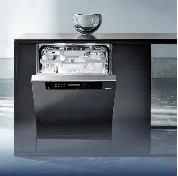
Let's be honest – most of us stare blankly at those rainbow-colored stickers on dishwashers like they're hieroglyphics. But here's the thing: understanding those labels could save you hundreds on your energy bills and conserve thousands of gallons of water. Gone are the days when choosing a dishwasher just meant comparing price tags. Modern efficiency labels reveal far more about how a machine performs where it matters: in your wallet and our planet's future.
Energy labeling isn't just some bureaucratic invention – it emerged because consumer choices actually shape environmental outcomes. Consider these changes:
1997: The first EU energy labels appeared with confusing A+ to G ratings.
2010: Revised standards forced manufacturers to improve efficiency by 20%.
2021: The current A-G scale reset all ratings, making Class D the new average and pushing innovation toward true efficiency.
Data shows this worked: Between 1990-2020, the average dishwasher's electricity consumption dropped 34% while water use plummeted 58% . That's equivalent to saving 200 Olympic swimming pools of water annually across Europe.
Let's decrypt those symbols together:
① Energy Rating (A-G): A is stellar efficiency; G means you'll pay dearly in bills.
② Energy Consumption: Shows kWh used per 100 cycles – the lower, the better.
③ Eco Program Duration: Typical runtime for efficient washes (usually 3-4 hours).
④ Water Consumption: Liters per cycle – aim for under 10L!
⑤ Capacity: Place settings the eco program cleans effectively.
⑥ Noise Level: Measured in decibels – under 45dB is whisper-quiet.
Modern dishwashers use just 9 liters per load versus the 20 liters typical for handwashing. But dig deeper and you'll find disparities:
Water Hogs vs. Savers: While all new machines meet the 10L EU limit, top performers like Bosch Serie 6 use just 6.5L, while budget models hover near 9.5L. Over 15 years, that difference equals filling an entire backyard pool!
Geographic Reality Check: Southern Europeans save more water with dishwashers than Northern counterparts since they often handwash with running water. Your location changes the calculus.
The big innovation isn't in motors – it's in temperature management:
Heating Efficiency: Premium models now pre-heat water through heat exchangers, cutting energy needs by 15%.
Detergent Impact: New EU detergent regulations allow effective cleaning at just 45°C instead of the old 65°C standard, creating massive energy savings.
The Phantom Drain: Did you know your dishwasher can consume up to 3W in standby? New standards limit this to 0.5W – check that spec sticker!
Projected 2030 Savings: Revised regulations will save enough electricity to power 250,000 homes and conserve water equivalent to daily needs of 2 million people annually.
We've focused on washing, but drying consumes up to 25% of a cycle's energy. New testing exposes real performance:
Condensation vs. Heating: Eco modes use residual heat for condensation drying (energy-efficient but slower). Standard modes blast heat (faster but energy-hungry).
The Plastic Problem: Plastic items dry poorly in eco modes – manufacturers now must declare if their machine can effectively dry plastics.
Real-World Hack: Simply cracking the door post-wash uses passive airflow for perfect drying at zero energy cost!
That efficiency sticker tells half the story. For peak performance:
Use Eco Mode Religiously: 95% of energy savings come from using this setting – don't override it for "quick" 30-minute cycles.
Maintenance Matters: Cleaning filters monthly improves water flow, cutting cycle times by 15%.
Loading Logic: Blocking spray arms causes re-runs – those extra washes erase all efficiency gains.
Energy labels transformed dishwashers from luxury items into sustainability partners. Choosing an A-rated model saves the average European household €77/year while conserving resources. Remember:
• Water consumption under 8L/cycle = top tier
• Energy use below 0.74kWh/cycle = excellent
• Eco programs should effectively dry ceramics
The future promises integrated AI optimizing wash cycles based on soil sensors – but today's labels already guide us toward truly efficient choices. Never underestimate how small savings in your kitchen multiply globally.
Recommend Products












