
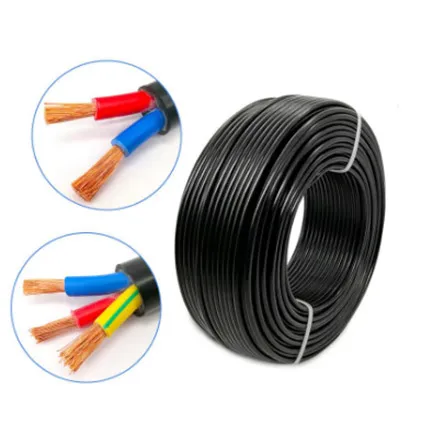
Walk onto any construction site or peer inside an electrical panel, and you'll notice two primary metals fighting for dominance: the reddish glow of copper versus the silver sheen of aluminum. These aren't just aesthetic choices - they represent a fundamental engineering decision impacting safety, budget, and long-term performance.
Ever wonder why water pipes aren't made from chocolate? Same principle applies to cables. Copper's atomic structure - with its crowded 29 electrons - creates an electron highway for electricity. Think of it like a six-lane freeway during rush hour: electrons flow easily with minimal congestion (resistance). That's why a 12-gauge copper wire handles current like a champ.
Aluminum's 13 electrons create wider lanes but with occasional potholes. Its crystalline structure leaves microscopic gaps where oxidation creeps in over time. Picture a country road: perfectly functional for tractors (high-voltage transmission), but needing special tuning for sports cars (branch circuits). That's why we see aluminum dominate in those massive transmission lines crisscrossing highways.
Practical Reality: Aluminum cables feel deceptively lighter when pulling through conduit - almost 50% weight reduction versus copper. Your shoulders will thank you after a day fishing cables through ceiling cavities.
Imagine if you swapped every copper cable in a 30-story building with aluminum. The savings wouldn't just buy coffee for the crew - it could fund the entire flooring installation. Copper currently runs 3-4x aluminum's price per pound, making it the Maserati to aluminum's Toyota Camry.
| Cost Factor | Aluminum | Copper |
|---|---|---|
| Material Cost (per lb) | $1.20 - $1.50 | $3.80 - $4.20 |
| Commercial Building Savings* | ≈ $120,000 | Baseline |
| Industrial Complex Savings* | ≈ $850,000 | Baseline |
| DIYer Impact (100ft 12/2) | $85 | $230 |
*Savings estimates based on 250,000 sq ft commercial space and 1.2M sq ft industrial facility
Ever smelled that distinct ozone scent near overheated connections? That's often aluminum's party trick. Its expansion/contraction dance with temperature changes loosens connections over time. Real electricians carry anti-oxidant paste like chefs carry salt - essential for creating permanent, low-resistance bonds that won't turn into mini heaters.
When installing modern power cables in industrial settings, aluminum's flexibility becomes a genuine asset. Trying to bend thick copper feeders through tight spaces feels like wrestling an anaconda. Aluminum? More like persuading a friendly python.
In your laundry room: That vibrating washing machine causes subtle conductor movement. Copper shrugs it off while aluminum connections demand quality lugs and proper torque to avoid failure points. Your choice determines whether you get 10 problem-free years versus 30.
In coastal Florida: Salt air turns aluminum connections into science experiments. Here, copper's corrosion resistance becomes non-negotiable unless you enjoy replacing service entrances every decade.
| Application | Aluminum Advantages | Copper Advantages |
|---|---|---|
| High-Voltage Transmission |
Weight savings
Cost efficiency |
Impractical weight
Cost prohibitive |
| Residential Branch Circuits |
Special terminations
Thermal concerns |
Reliability
Ease of installation |
| Industrial Motors |
Vibration resistance
Cost at scale |
Lower maintenance
Density advantage |
Installation Tip: That "aluminum-rated" marking on receptacles exists for a reason. Using standard devices with aluminum is like putting regular gas in a Ferrari - expect catastrophic failure eventually.
The tragic reality is that aluminum's reputation originates from 1960s-era failures before we understood its quirks. Modern AA-8000 alloys combined with proper installation techniques have largely solved these issues, yet the ghost of melted connections past still haunts project managers.
Consider thermal runaway: When connections degrade, resistance increases, generating heat in a vicious cycle. Aluminum failures tend to be more dramatic - sparks flying versus copper's slower overheating. Neither is acceptable, but the visual drama explains aluminum's lingering reputation challenge.
For eco-conscious builders, aluminum hits different. Recycling it consumes just 5% of the energy needed for new aluminum production. That scrap aluminum romex you tear out? It's not trash - it's cash for metal recyclers and a carbon footprint reducer.
Copper mining creates vast environmental scars - open pits visible from space. Choosing copper over aluminum sometimes feels like picking a gas-guzzler when a hybrid would suffice.
Future Forecast: Advanced aluminum alloys are closing the conductivity gap while nanotechnology coatings promise to eliminate oxidation. Your grandchildren might know copper cables only from museum exhibits.
Stop ideological battles about "best" material. Professionals match the metal to the mission:
• Reaching utility poles?
Aluminum
dominates the skies
• Feeding hospital ICU equipment?
Copper
ensures reliability
• Running feeders to rooftop HVAC?
Aluminum
saves your back
• Installing kitchen circuits?
Copper
sleeps better at night
The wise electrician carries both metals in their van, knowing each has earned its place through decades of real-world testing. The material doesn't determine success - proper installation and respect for each metal's personality does.
Recommend Products












