


The Unexpected Journey Begins
Ever felt that sudden wave of exhaustion wash over you as you emerge from a long-haul flight? Your feet ache, your back protests, and the gate signs seem to stretch endlessly ahead like some cruel joke. It's that dreaded moment when you realize your connecting flight is at Gate Z99 - the airport equivalent of Siberia. This universal traveler's lament is precisely where our story of airport moving walkways begins.
Imagine Sarah, a business traveler rushing through London Heathrow after a grueling 11-hour flight from Singapore. Her meeting starts in two hours, but her next flight arrives at Terminal 5 while her connection departs from Terminal 3 - nearly a mile apart. The clock is ticking as she spots the gleaming stainless steel pathway - what regular travelers affectionately call "the magic carpet." With her wheeled suitcase gliding beside her, Sarah feels both relief and momentum, making what would have been an exhausting sprint into a manageable transition.
More Than Just Convenience
These innovative people movers aren't just a lazy traveler's shortcut. They represent a significant evolution in how we navigate large spaces, blending human physiology with engineering precision. Modern airports span vast areas equivalent to small cities - Denver International Airport covers an astonishing 33,531 acres, larger than Manhattan. Without moving walkways, passengers would face marathons just to make connections.
Engineering the Human Experience
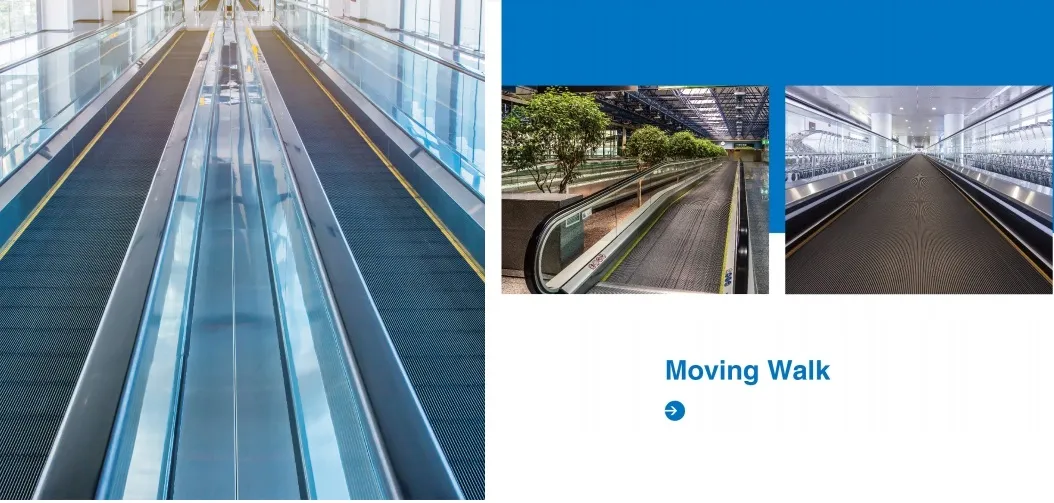
Designing an effective moving walkway involves fascinating engineering considerations hidden from the average traveler. The angle of inclination must be shallow enough to prevent balance issues yet steep enough to be functional. Materials like slip-resistant rubber flooring and sturdy steel framing create durable paths that withstand millions of footsteps annually.
The tactile guidance systems along the edges assist visually impaired travelers, while the constant metal grooves along the sides accommodate every size of luggage wheel. Particularly important is the waterproof flooring system that ensures safety even during rainy seasons when travelers track moisture inside. This attention to detail transforms what could be a mere conveyor into a carefully crafted people-moving experience.
Surprising Health Benefits
Beyond the obvious convenience, moving walkways offer genuine health advantages that are often overlooked. For travelers with mobility challenges, these pathways represent independence. Elderly passengers who might struggle with long distances find their airport experience transformed. Post-surgical travelers, pregnant flyers, and those managing chronic pain conditions all benefit enormously.
Research from the Journal of Transport & Health reveals that moving walkways reduce perceived exertion by nearly 50% compared to conventional walking. Less fatigue translates to more alert travelers making safer decisions. There's even fascinating data suggesting that travelers using walkways experience lower stress hormone levels compared to those power-walking through terminals.
Case Study: Singapore Changi's Masterclass
Singapore's award-winning airport demonstrates walkway integration at its finest. What sets Changi apart isn't just having these pathways, but how they connect diverse zones while enhancing the passenger experience. Notice how walkways pass through indoor gardens, around water features, and alongside retail zones, turning travel necessity into an architectural highlight.
The airport's innovative "progressive movement" system connects terminals with inclined walkways that shift gradually between levels, eliminating the need for sudden elevator transfers. This thoughtful planning reduces congestion at elevators and escalators while creating a surprisingly pleasant passenger flow. It's a prime example of how walkways should integrate with broader terminal design rather than simply being bolted on as an afterthought.
Overcoming Psychological Barriers
There's an intriguing psychological aspect to moving walkway usage that airport planners are just beginning to understand. Studies reveal a fascinating behavioral pattern: travelers will choose walkways even when traditional walking would be faster in uncrowded conditions. The illusion of being "transported" reduces mental fatigue regardless of actual time savings.
Mark, a frequent flyer with anxiety around travel, always seeks these pathways not because he needs physical assistance, but because the predictable movement creates a calming routine. "It's my mental runway," he jokes, "a few minutes of predictable motion before the chaos of boarding."
This psychological comfort explains why modern designs increasingly feature transparent barriers and open sightlines along walkways. Seeing the terminal unfold around you rather than being enclosed in tunnel-like corridors enhances spatial awareness while reducing that claustrophobic feeling common in older airports.
The Economics of Moving People
Airports are masterclasses in crowd flow economics, and walkways play a pivotal role. These systems effectively reduce passenger density in high-traffic corridors, preventing dangerous bottlenecks during peak periods. When walkways are strategically placed, passenger distribution becomes more balanced throughout terminals.
For retail operators, walkways present unique advantages. The slower pace compared to walking provides passengers with additional dwell time near stores. Cleverly positioned pathways guide passengers past shopping zones without creating the aggressive funneling that turns off travelers. Airport revenue managers have discovered that well-designed walkway routes can increase dwell time near retail areas by 20-30% without passenger resistance.
Future Innovations on the Horizon
The future of airport mobility promises revolutionary changes. Early prototypes of accelerating walkways could increase transit speeds by 50%, while integrated charging points will replenish devices during transit. Munich Airport's test program of pressure-sensitive surfaces could lead to pathways that adapt their speed to crowd density.
Perhaps most exciting are AI-powered systems being developed that would interact with passenger boarding passes. Imagine stepping onto a walkway that recognizes your connection details and guides you with lighted directional cues embedded in the path. Or integrated screens displaying personalized gate updates as you travel. These technologies represent the next evolution in personalized airport navigation.
Solving Real-World Design Challenges
Implementing effective walkways presents unique architectural puzzles. Integrating these systems with existing terminal layouts requires creative solutions. How does one add people-movers to historic terminals not designed for modern passenger volumes? Madrid's Barajas Airport offers an elegant solution with elevated glass walkways preserving the original architecture below.
The waterproof flooring system isn't just about preventing slips - it's a critical element extending equipment longevity. Water-resistant construction protects internal mechanisms from humidity and cleaning processes, reducing maintenance needs. This consideration becomes especially important in tropical climates where humidity challenges electronics and moving parts constantly.
The placement decision is equally crucial. Should walkways run parallel to main corridors or diagonally cutting distance? Chicago O'Hare's Terminal 1 demonstrates diagonal placement that saves travelers up to 25% distance compared to the main corridor layout. But this approach requires careful planning to avoid impeding passenger flows elsewhere.
Sustainability Considerations
Modern moving walkways surprisingly contribute to airport sustainability goals. Their energy consumption has decreased dramatically with modern variable-speed motors that adjust to passenger volume. Hong Kong International reports a 40% energy reduction since switching to demand-responsive systems.
Material choices increasingly incorporate recycled content - from recycled steel frames to sustainable rubber surfaces. Maintenance procedures have evolved to minimize environmental impact, with water-based cleaning solutions and modular component replacement extending overall system lifespan. These sustainability efforts align with broader industry goals while preserving the passenger experience.
Beyond Airports: Unexpected Applications
The technology developed for airport walkways is finding surprising applications elsewhere. Mega-hospitals in urban centers have adopted variations to help patients navigate vast facilities. University campuses employ similar systems during enrollment seasons when students shuttle between distant buildings. The principles developed through decades of airport research are transforming movement across many contexts.
Perhaps most promising is how this technology could revitalize urban centers. Imagine districts where commuters glide between transit hubs and office clusters, reducing congestion while encouraging economic activity. These systems could significantly reshape how we design future cities to promote accessibility.
The Human Connection
Beyond the technical achievements, moving walkways create unexpected moments of human connection. Travelers share tired smiles as mutual fatigue transitions to relief. Parents teach toddlers how to ride safely. Strangers become temporary travel companions during brief journeys between points A and B.
"I met my husband on a moving walkway at Tokyo Narita," recalls Emily. "We were both heading to the same gate after his flight from San Francisco and mine from Sydney. Our suitcases got tangled, which led to conversation, which led to coffee, and... well, twelve years later we're still traveling together."
These systems represent a unique intersection between transportation design and human psychology. They create brief moments of pause within the frenzy of travel, allowing passengers to gather themselves while still making progress toward their destinations. This subtle blend of rest and movement is central to their effectiveness.
A Transportation Revolution
Moving walkways represent a quiet revolution in how we navigate complex spaces. Their seemingly simple purpose - moving people efficiently - masks sophisticated engineering that integrates mechanics, materials science, traffic flow dynamics, and human factors research. These systems democratize mobility within increasingly large travel facilities.
Modern airport walkways feature innovations like low-noise engines, adaptive speed control, and predictive maintenance systems. The waterproof flooring essential for safety has evolved into premium materials that are slip-resistant while providing comfortable cushioning. This continuous refinement demonstrates the industry's commitment to constant improvement.
Looking Ahead
As aviation continues evolving, moving walkways will play an increasingly strategic role. Airport expansions focus less on adding gates and more on improving connectivity between existing facilities. Urban airports constrained by geography increasingly rely on vertical stacking connected by inclined people movers.
The next decade promises to bring technologies previously only imagined: AI-assisted navigation that routes travelers based on connection times, integrated biometric verification during transit, and solar-powered systems that contribute energy back to terminal grids. These innovations will maintain the walkways' core function while adding intelligence and sustainability.
Ultimately, moving walkways represent what travel should be: less friction, more experience. They transform exhausting distances into manageable transitions, making airports more accessible to everyone. The next time you find yourself gliding effortlessly to your distant gate, remember that beneath the surface lies an impressive combination of engineering, human-centered design, and thoughtful planning. These quiet pathways don't just move people - they make travel better.










