
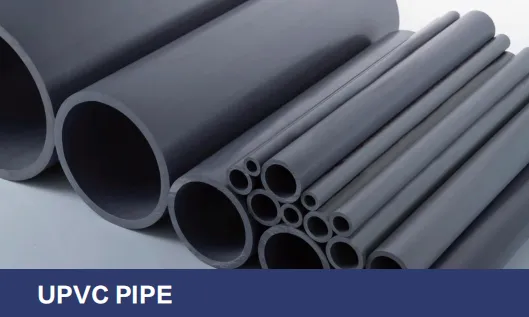
Imagine turning on your kitchen faucet and being met with a sputter instead of a steady stream. Or worse, stepping into your basement to find a pool of water spreading across the floor—another leak from pipes that have been silently deteriorating for decades. For homeowners, business owners, and city planners alike, the crisis of aging infrastructure isn't a distant threat; it's a daily reality. From crumbling water mains beneath city streets to corroded plumbing in century-old homes, the cost of inaction is mounting. Leaks waste billions of gallons of water annually, repair bills drain municipal budgets, and outdated systems put public health at risk. But amid this challenge, there's a solution that's quietly transforming how we approach infrastructure retrofits: UPVC pipe solutions. Lightweight, durable, and surprisingly versatile, UPVC (unplasticized polyvinyl chloride) is emerging as a hero for modernizing everything from residential plumbing to commercial drainage systems. In this article, we'll explore why aging infrastructure demands urgent attention, how UPVC addresses its most pressing flaws, and real-world examples of how upvc pipe suppliers and pipes fittings suppliers are partnering with communities to build a more resilient future.
Infrastructure is the invisible backbone of modern life. It delivers clean water to our homes, carries away waste, and powers our cities—but much of it was built for a world that no longer exists. In the United States alone, the Environmental Protection Agency (EPA) estimates that over 40% of drinking water pipes are past their 50-year lifespan, with some dating back to the 19th century. In Europe, cities like London and Paris grapple with Victorian-era sewers that were never designed to handle today's population density. Even in rapidly developing regions like Saudi Arabia, where urban growth has surged, older neighborhoods and commercial districts face the same problem: pipes made from materials like cast iron, galvanized steel, and clay that simply weren't built to last.
The consequences of neglect are stark. Cast iron pipes, once a staple of early 20th-century construction, corrode from the inside out, releasing rust particles into water supplies and narrowing diameters until flow is restricted. Galvanized steel fares little better; over time, mineral deposits build up, creating blockages, while the metal itself weakens, leading to cracks and leaks. Clay pipes, common in older drainage systems, are brittle and prone to cracking under soil pressure or seismic activity. The result? A study by the American Society of Civil Engineers found that the U.S. loses over 1.6 trillion gallons of treated water each year to leaks—enough to supply 25 million homes. For businesses, a single burst pipe can mean days of downtime, lost revenue, and costly repairs. For hospitals and schools, outdated plumbing poses even greater risks, as leaks can damage medical equipment, disrupt classes, or contaminate sterile environments.
The Numbers Speak for Themselves: According to the World Bank, global spending on water infrastructure will need to reach $114 billion annually by 2030 just to keep pace with demand. In Saudi Arabia, where urbanization rates exceed 85%, the Ministry of Municipal and Rural Affairs has identified over 30,000 kilometers of water pipes in need of replacement. The message is clear: retrofitting isn't optional—it's essential. And choosing the right materials for these retrofits will determine whether we're just patching problems or building systems that can stand the test of time.
When it comes to retrofitting aging infrastructure, the goal isn't just to replace old pipes with new ones—it's to replace them with something better. That's where UPVC comes in. Unlike traditional materials, UPVC is engineered for longevity, performance, and adaptability. Let's break down why it's becoming the material of choice for residential building materials suppliers , commercial building materials suppliers , and engineers worldwide.
First, UPVC is inherently resistant to corrosion and chemical degradation. Unlike metal pipes, it doesn't rust when exposed to water or soil, and it won't react with acids, alkalis, or mineral deposits—common culprits in pipe failure. This makes it ideal for both potable water systems (where purity is critical) and drainage systems (where wastewater can be highly corrosive). For hospitals and schools, where hygiene and safety are non-negotiable, UPVC's smooth interior surface also resists bacterial growth, reducing the risk of contamination. Compare that to galvanized steel, which can develop biofilms over time, or cast iron, which leaches rust into water supplies, and the advantage is clear.
Second, UPVC is surprisingly strong for its weight. A 4-inch UPVC pipe weighs roughly 1/8th of a comparable cast iron pipe, making it easier to transport, handle, and install—especially in tight spaces like crawl spaces or between walls. This lightweight nature cuts down on labor costs and installation time, a major plus for retrofits where minimizing disruption is key. Imagine a team replacing pipes in a busy shopping mall: with UPVC, they can work quickly, avoiding extended closures that hurt businesses. For homeowners, it means less damage to walls and floors during installation, translating to lower repair bills.
Third, UPVC is cost-effective over its entire lifecycle. While the upfront cost of UPVC may be slightly higher than some outdated materials, its 50+ year lifespan (compared to 20-30 years for galvanized steel) and minimal maintenance needs make it a far better investment. There's no need for periodic painting or corrosion treatments, and leaks are rare thanks to its flexibility—UPVC can withstand minor ground shifts without cracking, unlike rigid clay or concrete pipes. For municipalities stretching tight budgets, this longevity means fewer replacements and lower long-term costs.
Finally, UPVC is incredibly versatile. Upvc pipe suppliers offer a range of products tailored to specific needs: from small-diameter pipes for residential plumbing to large-diameter pressure pipes for municipal water mains. Pvc dwv pipe suppliers provide drainage, waste, and vent (DWV) systems designed to handle high-volume wastewater flow, while pvc well casing and screen pipes suppliers offer solutions for groundwater extraction. Even specialized applications, like chemical processing or industrial irrigation, benefit from UPVC's chemical resistance. It's not just a one-size-fits-all material—it's a toolkit for solving infrastructure challenges across sectors.
A successful retrofit isn't just about pipes—it's about creating a seamless, integrated system. That's why upvc pipe suppliers and pipes fittings suppliers offer more than just lengths of tubing; they provide a complete ecosystem of products designed to work together. Let's explore the key components that make UPVC retrofits so effective:
For potable water supply or pressurized irrigation systems, upvc pipe solutions include pressure-rated pipes built to withstand high water pressure without bursting. These pipes come in various schedules (e.g., SCH40, SCH80) to match specific pressure requirements—SCH40 for residential and light commercial use, SCH80 for industrial or high-pressure applications. What sets them apart is their smooth interior, which reduces friction and allows water to flow more efficiently than through corroded metal pipes. In fact, studies show that UPVC pressure pipes can improve water flow rates by up to 30% compared to older galvanized steel pipes, reducing energy costs for pumps and ensuring consistent water pressure even in large buildings.
Drainage, waste, and vent (DWV) systems are the unsung heroes of plumbing—they remove wastewater and prevent harmful gases from entering buildings. But older DWV systems, often made of clay or cast iron, are prone to clogs and cracks. Pvc dwv pipe suppliers address this with UPVC DWV pipes designed for optimal flow. Their smooth walls prevent debris buildup, while their lightweight design makes them easy to install in tight vertical and horizontal runs (think apartment buildings or commercial kitchens with complex layouts). Plus, UPVC DWV pipes are fire-resistant and meet strict building codes, making them a safe choice for hospitals, schools, and high-rise buildings.
Even the best pipes are only as good as the connections between them. That's where pipes fittings suppliers and plastic valve system suppliers come in. UPVC fittings—elbows, tees, couplings, and reducers—are precision-engineered to create leak-proof joints using solvent cement, a bonding agent that fuses the fitting and pipe into a single, seamless unit. Unlike threaded metal fittings, which can loosen over time, solvent-welded UPVC connections are permanent and resistant to vibration. Plastic valve system suppliers complement this with ball valves, gate valves, and check valves made from UPVC, which offer smooth operation and corrosion resistance. Together, these components ensure that retrofitted systems are not just functional, but reliable.
UPVC's versatility extends beyond traditional plumbing. Pvc well casing and screen pipes suppliers provide durable, corrosion-resistant casing for water wells, protecting groundwater quality and preventing collapse. Electrical contractors rely on UPVC conduits to shield wiring from moisture and physical damage, while agricultural operations use UPVC pipes for irrigation and fertilizer distribution. Even in harsh environments—like coastal areas with saltwater exposure or industrial zones with chemical runoff—UPVC holds its own, making it a go-to for specialized retrofit projects.
| Material | Typical Lifespan | Corrosion Resistance | Installation Cost | Maintenance Needs | Weight (per 10ft pipe) |
|---|---|---|---|---|---|
| Cast Iron | 25-50 years | Low (rusts easily) | High (requires heavy machinery) | Frequent (rust removal, repairs) | 80-100 lbs |
| Galvanized Steel | 20-30 years | Moderate (zinc coating wears off) | High (welding required) | Regular (mineral deposit cleaning) | 40-60 lbs |
| UPVC | 50+ years | High (resistant to rust, chemicals) | Low (lightweight, no welding) | Minimal (occasional inspection) | 10-15 lbs |
Numbers and specs tell part of the story, but real change happens when solutions are put into action. Let's look at three case studies where upvc pipe solutions , pvc dwv pipe suppliers , and plastic valve system suppliers have transformed aging infrastructure—one neighborhood, one building, and one city at a time.
In the Al Hamra district of Jeddah, a community of 500+ homes had been struggling with recurring plumbing issues for years. Built in the 1970s with galvanized steel pipes, the neighborhood faced frequent leaks, low water pressure, and discolored water—complaints that overwhelmed local plumbers. In 2023, the homeowners' association partnered with a residential building materials supplier specializing in UPVC retrofits. Over six months, crews replaced all main water lines and internal plumbing with SCH40 UPVC pressure pipes, DWV pipes, and plastic valve systems. The results were immediate: leaks dropped by 92%, water pressure stabilized, and residents reported clearer, better-tasting water. "We used to have a plumber out at least once a month," said homeowner Fatima Al-Mansoori. "Now, six months later, we haven't had a single issue. It's like night and day."
The Oasis Mall, a popular shopping center in Dubai, was losing revenue due to frequent basement floods. Its 30-year-old cast iron drainage system had corroded to the point where even minor storms caused backups, forcing store closures. In 2022, the mall's management team hired a commercial building materials supplier to retrofit the entire DWV system with UPVC pipes and fittings. The project focused on high-traffic areas like food courts and restrooms, where drainage volume is highest. Using lightweight UPVC pipes, crews worked overnight to minimize disruption, installing solvent-welded joints and pressure-tested valves from a plastic valve system supplier . Within a year, flood incidents dropped to zero, and tenant satisfaction scores rose by 40%. "We were skeptical at first—how could plastic pipes be stronger than metal?" said mall engineer Ahmed Khalid. "But the UPVC has held up better than we ever imagined, even during Dubai's heaviest rains."
The city of Riyadh faced a crisis in 2021: over 40% of its water supply was being lost to leaks in aging cast iron mains, some dating back to the 1960s. With population growth straining resources, the municipality launched a $200 million retrofit program, prioritizing high-loss zones. Working with a saudi arabia building materials supplier , engineers selected 12-inch UPVC pressure pipes (SCH80) for their durability and ease of installation. Over 18 months, crews replaced 30 kilometers of mains, using trenchless technology to minimize street closures. The project reduced water loss by 28%, saving an estimated 15 million gallons daily—enough to supply 30,000 homes. "UPVC was the clear choice," said project manager Layla Hassan. "It's resistant to the desert heat, easy to join, and we didn't need heavy equipment to install it. We finished ahead of schedule and under budget."
One of the biggest barriers to infrastructure retrofits is the fear of disruption. Digging up streets, tearing down walls, and rerouting services can be chaotic—unless you're working with UPVC. Its unique properties make installation faster, simpler, and less invasive than traditional materials, while its low-maintenance nature ensures that once the job is done, it stays done.
Installation Made Easy: Unlike cast iron or concrete, UPVC pipes are lightweight—even a 20-foot length of 6-inch UPVC weighs less than 30 pounds, making it easy for two workers to carry and position. This eliminates the need for cranes or heavy machinery, which is especially valuable in urban areas or tight spaces like basements. UPVC also doesn't require welding, threading, or specialized tools; joints are sealed with solvent cement, a process that takes minutes to cure. For trenchless retrofits (where pipes are pulled through existing tunnels), UPVC's flexibility allows it to navigate bends and obstacles without cracking—a feat that rigid materials like clay can't match.
Maintenance That Doesn't Cost a Fortune: Once installed, UPVC pipes demand little attention. There's no need for corrosion treatments, painting, or regular inspections for rust. Their smooth interiors resist scale buildup, so cleaning is rarely necessary—even in hard water areas. For property owners, this translates to lower long-term costs. A study by the Plastics Pipe Institute found that UPVC systems have 70% lower maintenance costs over 50 years compared to cast iron. And when repairs are needed (a rare occurrence), they're straightforward: sections can be cut and replaced with new fittings from a pipes fittings supplier without disrupting the entire system.
Pro Tip for Installers: Always work with a reputable upvc pipe supplier that provides technical support. Proper installation—including correct solvent cement application and curing time—is critical to ensuring joints are leak-proof. Many suppliers offer training programs for contractors, helping them master best practices and avoid common pitfalls.
Retrofitting with UPVC isn't just about solving today's problems; it's about building for tomorrow. As climate change brings more extreme weather, population growth strains resources, and cities demand greener solutions, UPVC stands out as a material that can adapt and endure.
Sustainability by Design: UPVC is inherently eco-friendly. Its production requires less energy than metal or concrete, and its long lifespan means fewer replacements—and thus less waste. Many upvc pipe suppliers also offer recycled UPVC options, further reducing environmental impact. What's more, UPVC's efficiency reduces water and energy waste: by minimizing leaks, it conserves water, and by reducing friction in pipes, it lowers the energy needed to pump water through systems. For LEED-certified buildings or cities aiming for net-zero goals, UPVC is a sustainable choice.
Resilience to Climate Change: Extreme temperatures, ground movement, and severe storms are putting infrastructure to the test. UPVC thrives in these conditions. It can withstand temperatures from -40°C to 60°C (-40°F to 140°F), making it suitable for both desert and cold climates. Its flexibility allows it to absorb minor ground shifts without cracking, reducing the risk of earthquake damage. In coastal areas, UPVC's resistance to saltwater corrosion makes it ideal for waterfront developments or regions prone to flooding.
Meeting Tomorrow's Demands: As cities grow and technology evolves, infrastructure must keep up. UPVC's versatility makes it ready for the future. It can integrate with smart systems, like sensors that monitor flow rates and detect leaks in real time. It's compatible with new materials, such as mcm flexible cladding stone wall panels or bamboo charcoal board wall panels , allowing for cohesive, modern building designs. And as one-stop architectural solution providers expand their offerings, UPVC remains a cornerstone—proving that even the most basic infrastructure components can be part of innovative, forward-thinking projects.
Aging infrastructure isn't a problem that will solve itself. Every day we delay retrofits, the cost of repairs rises, and the risk to public health and safety grows. But with upvc pipe solutions , we have a tool that turns necessity into opportunity—an opportunity to build systems that are stronger, safer, and more sustainable than ever before.
From residential neighborhoods in Jeddah to commercial malls in Dubai, from municipal water mains in Riyadh to hospital plumbing systems worldwide, UPVC is proving its worth. It's lightweight yet durable, affordable yet long-lasting, and easy to install yet ready for the challenges of tomorrow. And with the support of saudi arabia building materials suppliers , pipes fittings suppliers , and plastic valve system suppliers , communities have access to the expertise and products they need to make retrofits a success.
So whether you're a homeowner tired of dealing with leaks, a business owner looking to protect your bottom line, or a city planner tasked with securing your community's future, remember this: retrofitting with UPVC isn't just a repair—it's an investment in resilience. It's about turning crumbling infrastructure into a foundation for growth. And in a world where the only constant is change, that's the best investment we can make.
Recommend Products












