
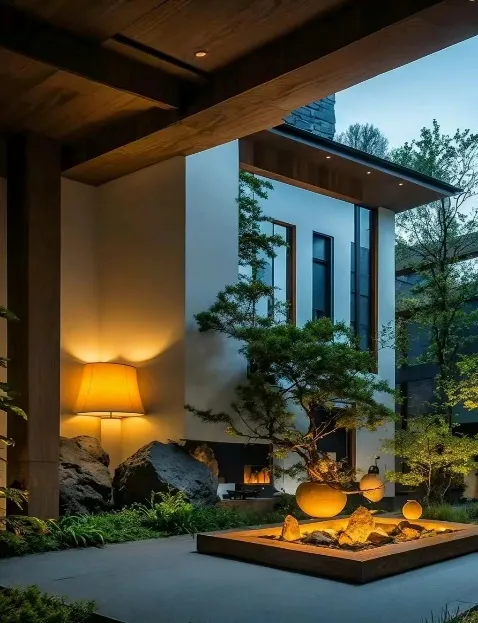
Outdoor spaces have become more than just extensions of buildings—they're where memories are made, businesses connect with customers, and communities thrive. Whether it's a residential patio where families gather after sunset or a commercial plaza that comes alive with evening events, lighting plays a starring role in shaping these experiences. But in a world increasingly focused on sustainability, the question arises: How do we keep these spaces bright, beautiful, and kind to the planet? Solar power has emerged as a leading answer, yet traditional solar panels often feel like an afterthought—clunky, out of place, and at odds with thoughtful design. This is where Coloria steps in, reimagining solar panels not just as energy generators, but as integral parts of outdoor aesthetics.
At its core, Coloria is not just a building material provider; it's a one-stop architectural solution provider that understands the delicate balance between function and beauty. With decades of experienceing markets like Saudi Arabia and a global network spanning continents, Coloria has built its reputation on listening to what clients truly need: solutions that don't force them to choose between practicality and design. For outdoor lighting, this means solar panels that don't just power the lights—they enhance the space they're part of.
Imagine a luxury villa in Riyadh, where the outdoor terrace is designed with sleek stone flooring and modern minimalist furniture. The last thing any homeowner wants is a row of bulky, blue-tinted solar panels disrupting the view. Coloria's approach? Solar panels that blend into the roofline, match the exterior color palette, or even double as decorative elements—like a sleek awning over a patio that soaks up the sun by day and provides shade by afternoon, all while powering the evening's ambient lighting.
What sets Coloria's solar panels apart is a design philosophy centered on "harmony with architecture." Instead of treating solar panels as separate components, they're engineered to complement the building's style—whether it's a traditional Arabic majlis with intricate geometric patterns or a contemporary commercial tower with clean lines and glass facades.
| Feature | Traditional Solar Panels | Coloria Aesthetic Solar Panels |
| Design Flexibility | Limited to standard sizes/colors; often boxy and uniform | Customizable shapes, colors, and finishes to match building exteriors |
| Integration Options | Typically mounted on roofs or ground; little consideration for visual flow | Can be integrated into facades, awnings, pergolas, or even outdoor furniture |
| Visual Impact | Often seen as "add-ons" that disrupt architectural cohesion | Designed to enhance the space; some models double as decorative elements |
| Material Quality | Basic frames and finishes; prone to fading or discoloration over time | High-grade, weather-resistant materials with UV protection for long-lasting aesthetics |
Take, for example, Coloria's "FacadeFit" solar panels—a line specifically designed for architectural façade solutions . These panels are ultra-thin, lightweight, and available in a range of earth tones, allowing them to be installed directly onto exterior walls without adding bulk. For a commercial mall in Jeddah, Coloria used these panels to create a dynamic, sun-catching facade that generates enough energy to power the mall's outdoor lighting and signage, all while becoming a landmark feature of the building.
Another innovation is the "SolarTile," a solar panel designed to mimic the look of traditional roof tiles. For heritage-inspired residential projects, where preserving cultural architectural elements is key, SolarTiles blend seamlessly with clay or stone tiles, ensuring the home's character remains intact while embracing renewable energy.
What truly makes Coloria a standout residential and commercial building materials supplier is its ability to integrate solar panels with its broader range of products. Outdoor lighting doesn't exist in isolation—it's part of a larger ecosystem that includes flooring, walls, and even furniture. Coloria's one-stop approach means these elements work together, creating a cohesive outdoor space.
Consider a hospitality project, like a boutique hotel in Dubai with a sprawling garden terrace. The client wanted the space to feel luxurious yet eco-friendly, with lighting that highlights the garden's landscaping without increasing energy costs. Coloria's solution? Solar panels integrated into the pergola overhead, providing shade and power, paired with energy-efficient LED lighting embedded in the wpc wall panels that line the terrace. The panels, made from wood-plastic composite, add warmth to the space while being durable enough to withstand Dubai's harsh sun and occasional sandstorms. Below, the outdoor flooring—crafted from Coloria's slip-resistant, weatherproof porcelain slabs—complements the color of the solar panels, tying the entire design together.
For residential clients, this integration means less hassle and more consistency. A homeowner in Riyadh working on a backyard renovation can source solar panels, outdoor lighting, patio flooring, and even custom outdoor furniture from Coloria—all designed to work together. No more mismatched styles or compatibility issues; just a seamless process from concept to completion.
In an era where "sustainability" is more than a buzzword, Coloria's solar panels embody the company's commitment to sustainable building solutions . It's not just about generating clean energy—it's about the entire lifecycle of the product, from manufacturing to installation and beyond.
Coloria's solar panels are made with recycled materials where possible, and the company's manufacturing facilities prioritize reducing carbon emissions. Even the packaging is designed to be minimal and recyclable, aligning with global "" (dual-carbon goals) and Saudi Arabia's 2030 Vision, which emphasizes environmental sustainability and green growth. For clients in Saudi Arabia, this isn't just a plus—it's a necessity, as more and more projects are required to meet strict sustainability standards.
But sustainability also means durability. In regions like the Middle East, where temperatures soar and sandstorms are common, solar panels need to withstand extreme conditions. Coloria's panels are rigorously tested to resist corrosion, heat, and impact, ensuring they last for decades—reducing the need for frequent replacements and minimizing waste. A school in Dammam, for example, installed Coloria's solar panels over its outdoor playground in 2018; today, they're still operating at 95% efficiency, powering the playground lights and even feeding excess energy back into the school's main grid.
For architects and contractors, working with Coloria means more than just ordering products—it means partnering with a team that's invested in the project's success. Coloria's one-stop service covers every stage, from initial design consultations to post-installation support.
Early in the design phase, Coloria's technical team collaborates with architects to understand the project's aesthetic goals and energy needs. They provide 3D renderings to show how solar panels will look alongside other materials, making adjustments until the design feels just right. For a commercial office park in Riyadh, this meant tweaking the angle of the solar panels to maximize sun exposure while ensuring they didn't cast harsh shadows on the building's glass facade during peak hours.
During installation, Coloria's local teams in Saudi Arabia—staffed with experienced technicians who understand the region's climate and construction practices—ensure the panels are installed efficiently and safely. And because Coloria controls its global supply chain, there are no delays waiting for parts from multiple suppliers. Everything from the solar panels to the mounting hardware to the wiring is sourced through Coloria's network, ensuring quality and timeliness.
Post-installation, Coloria's commitment continues with maintenance support and performance monitoring. Clients can track their solar panels' energy output in real time via a user-friendly app, and if issues arise, Coloria's local service team is just a call away—no international wait times or language barriers.
As Coloria looks to the future, the focus remains on innovation—both in design and sustainability. The company is investing in research to develop solar panels with even more flexible designs, like transparent panels that can be used as part of glass facades, or panels that change color with the sun to reflect heat during the day and emit a soft glow at night.
Closer to home, Coloria is doubling down on its commitment to Saudi Arabia's 2030 Vision, which aims to diversify the economy and promote sustainable development. This includes training local talent in green construction practices and manufacturing, creating jobs, and reducing reliance on imported materials. For clients, this means access to cutting-edge solutions backed by local expertise—a win-win for both the community and the environment.
Outdoor spaces are where we live, work, and connect—and they deserve to be both beautiful and sustainable. Coloria's aesthetic solar panels aren't just a product; they're a testament to what's possible when a company truly listens to its clients. By blending design, function, and sustainability, Coloria is redefining what solar panels can be: not just tools for generating energy, but integral parts of the spaces we love.
Whether you're a homeowner dreaming of a backyard oasis, an architect designing the next iconic commercial building, or a developer aiming to meet sustainability goals, Coloria's one-stop approach ensures you don't have to compromise. With Coloria, outdoor lighting isn't just about seeing the space—it's about feeling it, knowing that every element has been chosen with care for both the planet and the people who use it.
Recommend Products












