
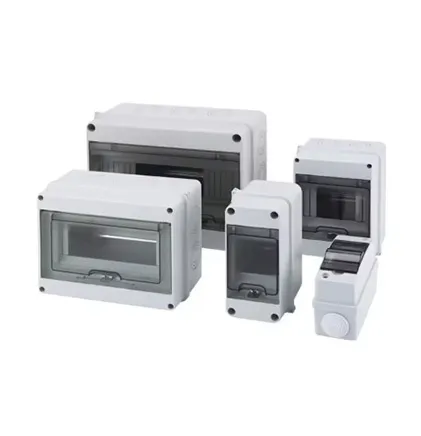
How intelligent electrical management is reshaping residential and commercial buildings—with insights from industry leaders in integrated building solutions
Walk into any modern construction site today, and you'll notice a shift: buildings are no longer just structures—they're living, breathing ecosystems. From self-adjusting HVAC systems to lighting that responds to occupancy, the "smart building" trend is transforming how we design, build, and live in spaces. At the center of this transformation? The humble distribution box, reimagined as a brain rather than just a breaker panel.
For decades, distribution boxes did one job: protect electrical circuits from overloads. You'd flip a switch if the power went out, and that was it. But as buildings grow more complex—with solar panels, smart appliances, and IoT devices—this old-school approach falls short. Imagine a commercial high-rise where the IT room suddenly draws extra power, or a family home where the EV charger, AC, and smart oven all kick on at once. Traditional boxes can't anticipate these needs, leading to inefficiencies, downtime, or worse, safety risks.
This is where advanced distribution box technology steps in. These aren't just upgraded breaker panels—they're intelligent hubs that monitor, analyze, and optimize electrical flow in real time. For residential building materials supplier and commercial building materials supplier alike, they're becoming a non-negotiable part of modern construction. And for companies like Coloria, a one-stop architectural solution provider with deep roots in markets like Saudi Arabia, they're a cornerstone of delivering future-ready buildings today.
Let's start with the basics: what's wrong with the distribution boxes of yesteryear? For one, they're reactive. They wait for a problem (like a short circuit) to trip a breaker, rather than preventing it. They also lack visibility: unless you're an electrician with a multimeter, you have no idea how much power each circuit is using. And forget about connectivity—there's no way to adjust settings remotely or integrate with other systems.
In commercial settings, this blindness is costly. A hotel might leave hallway lights on 24/7 because there's no way to track usage. A hospital could face equipment failures if power fluctuations go undetected. In homes, homeowners miss out on energy savings—like reducing AC power during peak hours—because the box can't communicate with smart devices.
Smart distribution boxes fix these gaps by adding three key layers: sensors, connectivity, and brains. Here's how they work:
For homeowners, smart distribution boxes turn "house" into "home"—with benefits that hit close to daily life. Take the average family: parents working from home, kids with gaming consoles, and a garage full of gadgets (EV charger, lawn mower, smart fridge). A traditional box might struggle when everyone's online at 7 PM, but a smart box? It balances the load automatically.
Safety is another win. Let's say a faulty toaster starts drawing excess current. Instead of the breaker tripping (and plunging the house into darkness), the smart box isolates just that circuit, sends an alert to the homeowner's phone, and even suggests a repair service. For families with elderly relatives or young kids, this peace of mind is priceless.
Then there's energy savings. The U.S. Department of Energy estimates that smart home tech can cut energy bills by 10-15%—and smart distribution boxes are a big reason why. By tracking usage, they help homeowners identify energy hogs (hello, that old chest freezer in the basement) and adjust habits. Pair that with solar panels (a key product in Coloria's sustainable products line), and you're looking at even bigger savings.
In commercial buildings, smart distribution boxes are a bottom-line game-changer. Let's take a mid-sized office in Riyadh, Saudi Arabia—a market where Coloria, as a Saudi Arabia building materials supplier , has deep expertise. The building has 50 workstations, a server room, and common areas like lobbies and restrooms. A traditional setup might waste 20% of energy on unneeded lighting, AC, or idle equipment.
A smart distribution box changes that. It tracks which floors are occupied, dimming lights and lowering AC in empty zones. It monitors the server room's power needs, preventing overloads during data backups. It even integrates with the building's solar panels, prioritizing renewable energy when the sun is shining. Over a year, these tweaks can cut energy costs by 25-30%—a massive saving for businesses in a region where electricity demand (and costs) are rising.
Hospitals and schools benefit too. For example, Coloria's Class A fireproof CPL inorganic board (used in hospitals and schools) is designed for safety—and paired with a smart distribution box, it creates a double layer of protection. The box ensures critical equipment (like MRI machines or lab freezers) never loses power, while the fireproof boards contain electrical fires if they do occur. It's integration at its best: two products from the same one-stop architectural solution provider working together to enhance safety.
| Use Case | Traditional Distribution Box | Smart Distribution Box |
|---|---|---|
| Residential: Managing peak energy use | Breakers trip when too many devices run at once; no prior warning. | Alerts homeowner to high usage; automatically shifts power to essential devices (e.g., fridge) and pauses non-essentials (e.g., EV charger). |
| Commercial: Hotel hallway lighting | Lights stay on 24/7; no way to adjust based on occupancy. | Dims lights to 30% during low-traffic hours; brightens when motion is detected. |
| Industrial: Factory equipment | Sudden power surges damage machinery; no way to predict issues. | Monitors voltage fluctuations; alerts maintenance teams before equipment fails. |
Here's the thing about smart distribution boxes: they don't work in isolation. To deliver real value, they need to integrate with other electrical components—cables, fixtures, sensors, and even renewable energy systems. That's where being a one-stop architectural solution provider becomes a game-changer. Coloria doesn't just sell distribution boxes; it offers the full package: electrical fixtures, cables, solar panels, and even the decorative profiles that hide wiring in ceilings and walls.
This integration matters for two reasons. First, compatibility: when all components come from the same supplier, they're designed to work together. No more mismatched cables causing communication delays between the box and the solar panel. Second, convenience: contractors can order everything from one source, reducing lead times and simplifying logistics. In Saudi Arabia, where construction timelines are tight and supply chains can be complex, this "one-stop shop" model is a huge advantage.
Coloria's presence in Saudi Arabia isn't just about having an office—it's about understanding the unique needs of the market. The country's "2030 Vision" emphasizes sustainability and, and Coloria's smart distribution boxes align with both goals. For example, the boxes support solar integration, helping buildings meet the Kingdom's renewable energy targets. They also create jobs: Coloria invests in training local technicians to install and maintain these systems, boosting the local workforce.
Internationally, Coloria's global service network ensures that whether you're building a luxury villa in Riyadh or a commercial complex in Dubai, you get the same level of support. A Saudi Arabia building materials supplier with a global reach, the company tailors its smart distribution boxes to regional standards—likeing to the high temperatures of the Middle East or the strict safety codes of Europe.
At the end of the day, even the smartest technology needs a human touch. Coloria's team of engineers and consultants work closely with clients to design electrical systems that fit their specific needs. A hotel chain might prioritize energy efficiency; a hospital, reliability; a homeowner, convenience. The company doesn't just sell a product—it designs a solution.
Take a recent project: a 200-unit residential complex in Jeddah. The developer wanted smart homes that appealed to young families, with features like voice-controlled lighting and energy management. Coloria provided not just the distribution boxes, but also the custom furniture (with built-in charging ports), LED lighting , and solar panels. The result? A fully integrated smart community where the distribution box acts as the silent conductor, making daily life easier for residents while keeping energy bills low.
The future of smart distribution boxes isn't just about more features—it's about deeper integration and sustainability. Here are three trends to watch:
Today's smart boxes alert you to issues—but tomorrow's will predict them. Imagine a box that analyzes 6 months of data and says, "The wiring in the kitchen circuit will fail in 3 weeks—schedule a repair." This is possible with AI, and Coloria is already investing in machine learning algorithms to make it a reality. For commercial clients, this means zero downtime; for homeowners, no more unexpected repair bills.
As the world moves toward "" (dual carbon goals), smart boxes will get greener too. Coloria's sustainable products line already includes eco-friendly materials, and the next generation of distribution boxes will follow suit. Think recycled metals in the casing, energy-efficient sensors, and designs that make recycling easy at the end of the box's life. It's not just about saving energy—it's about building sustainably from the ground up.
Right now, smart boxes connect to a handful of devices. In the future, they'll be the hub of the "Internet of Everything"—linking to security cameras, water meters, even waste management systems. For example, if a pipe leaks (detected by a smart water sensor), the box could cut power to nearby outlets to prevent electrical hazards. It's this level of cross-system communication that will make buildings truly "smart."
Let's be clear: smart distribution boxes aren't a luxury—they're the future of building. As energy costs rise, sustainability regulations tighten, and homeowners and businesses demand more control over their spaces, outdated electrical systems will become liabilities. For residential building materials supplier and commercial building materials supplier companies, offering these solutions isn't just a way to stay competitive—it's a way to lead.
For Coloria, a one-stop architectural solution provider with decades of experience, this future is already here. By combining smart technology with its full range of products—from distribution boxes to solar panels to fireproof building materials—the company is building more than structures. It's building smarter, safer, and more sustainable communities.
So the next time you flip a light switch or plug in your phone, take a second to think about the distribution box behind the scenes. In the best buildings, it's not just a box—it's a partner, working 24/7 to make your space more efficient, secure, and connected. And with companies like Coloria leading the way, that future is closer than you think.
Recommend Products












