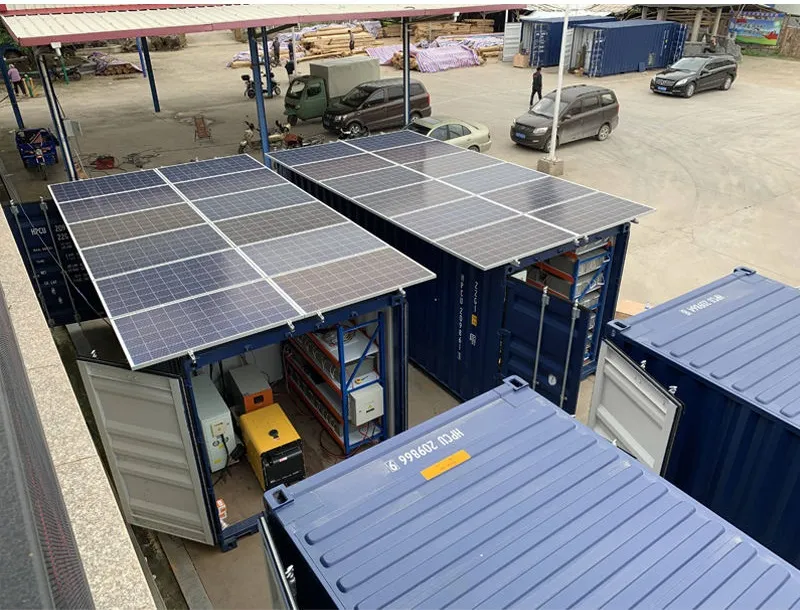
The global solar energy market continues to expand at a remarkable pace, driven by government incentives, corporate sustainability goals, and the declining cost of photovoltaic technology. For contractors, developers, and procurement managers, understanding
solar panel wholesale price dynamics is no longer optional—it is a critical skill that directly affects project margins and competitiveness. Yet many buyers still approach solar procurement without a clear framework, leaving money on the table or, worse, ending up with panels that underperform. This guide breaks down what actually shapes wholesale pricing, where hidden costs hide, and how to build a sourcing strategy that delivers real value.
What Really Drives Solar Panel Wholesale Pricing
If you have ever compared quotes from different
solar panels supplier options and wondered why the spread is so wide, you are not alone. Wholesale pricing is shaped by layers of variables that go well beyond the per-watt sticker price.
The single largest factor is cell technology. Monocrystalline panels using PERC, TOPCon, or HJT cell architectures command different price brackets based on conversion efficiency and manufacturing complexity. A high-efficiency TOPCon module will naturally cost more per watt than a standard polycrystalline panel, but the long-term yield difference can more than justify the premium—especially on projects where roof or land space is constrained.
Raw material costs are the second major lever. Polysilicon prices fluctuate with global supply and demand, and those swings trickle down to module pricing within weeks. When polysilicon capacity is tight, even efficient manufacturers pass costs along. The scale of production also matters enormously: factories running at high utilization with automated lines achieve unit costs that smaller, semi-automated operations simply cannot match.
Certification requirements add another layer. Panels destined for markets with strict standards—TÜV Rheinland, IEC 61215/61730, UL listings for North America, or specific fire ratings—carry compliance costs that are reflected in wholesale pricing. A panel that meets only basic certifications will be cheaper, but it may be unusable for projects in regulated jurisdictions.
Key takeaway: When evaluating wholesale prices, always confirm the cell technology, the certifications included, and the manufacturer's production scale. A low per-watt price means nothing if the panels cannot be deployed on your target project.
The Hidden Costs That Erode Your Budget
Many first-time buyers focus narrowly on the module price and overlook the costs that accumulate between the factory gate and the project site. International shipping, customs duties, and port handling fees can add a substantial percentage to the landed cost of solar panels. If your supplier quotes an FOB price without helping you estimate logistics, you could be in for an unpleasant surprise when the shipment arrives.
Then there is the question of quality consistency. A reputable manufacturer maintains tight quality control across every production batch, which means you receive panels that match the specification sheet. Lower-cost alternatives sometimes suffer from batch-to-batch variance—cells with slightly different efficiencies, frames with inconsistent anodizing, or junction boxes from different sub-suppliers. These inconsistencies create headaches during installation and can trigger warranty disputes later.
Warranty terms are another area where hidden cost differentials hide. A panel with a 12-year product warranty and a 25-year linear power output guarantee is fundamentally a different product from one offering 5 years of product coverage, even if both are labeled "25-year warranty" on the spec sheet. The difference represents a real financial risk that should factor into your total cost calculation.
Why Buying Direct from Manufacturers Makes Financial Sense
The solar supply chain has traditionally involved multiple intermediaries: trading companies, regional distributors, and local dealers—each adding their margin to the final price. When you
buy solar panels direct from manufacture, you eliminate those layers and access pricing that reflects actual production costs rather than accumulated markups.
Beyond price, the direct model offers advantages that intermediaries cannot easily replicate. Communication is faster and more accurate when you speak directly with the production team rather than going through a trading agent who must relay questions back and forth. If a project requires custom specifications—specific frame colors, different connector types, or modified cable lengths—a direct manufacturer can accommodate those requests at the production planning stage, whereas a distributor can only sell what is already in stock.
Factory-direct procurement also improves traceability. You know exactly which production line, which batch of cells, and which bill of materials went into your panels. If a warranty claim arises three years into operation, that traceability makes the difference between a swift resolution and a protracted dispute over responsibility.
What to Look for in a Solar Panel Supplier
Selecting the right
solar panels supplier requires looking beyond the price list. Start with manufacturing capability: does the supplier operate its own production facilities, or does it outsource to third-party OEM factories? In-house production generally means tighter quality control and better accountability. Ask about production line automation levels and annual capacity—these metrics give you a sense of whether the supplier can handle your order volume consistently.
Certifications are your next checkpoint. For buyers targeting European or Middle Eastern markets, IEC certifications and TÜV approval are essential. For projects in markets with specific building codes, confirm that the panels carry the required fire ratings and structural certifications. A supplier that cannot provide copies of current certifications upon request should raise immediate concerns.
After-sales support is the factor most buyers undervalue until they need it. Ask about the claims process: what documentation is required, how quickly claims are processed, and whether replacement panels are shipped from local stock or must come from the factory overseas. A supplier with a clear, documented warranty process and a track record of honoring claims is worth a modest price premium over one that treats warranty as a marketing slogan.
Quick checklist for evaluating a solar panel supplier:
• In-house manufacturing or OEM outsourcing?
• Current IEC/TÜV/UL certifications available?
• Warranty terms clearly documented (product & performance)?
• Claims process defined with response time commitments?
• Ability to supply sample panels for pre-order inspection?
The Advantage of a One-Stop Building Materials Partner
Solar panels rarely exist in isolation on a construction project. A commercial building that installs a rooftop solar array also needs electrical infrastructure—cables, distribution boxes, switches, and sockets—to connect that array to the building's power system. It may also need lighting systems, ceiling materials, wall panels, and flooring. Coordinating procurement across five or six separate suppliers multiplies administrative overhead, increases logistics complexity, and makes it harder to negotiate volume discounts.
This is where a one-stop solution provider creates genuine efficiency. COLORIA GROUP, headquartered in Foshan, China's manufacturing heartland, supplies solar panels alongside a comprehensive range of building materials spanning 13 product categories—from walls and flooring to pipes and fittings, sanitary fixtures, customized furniture, windows and doors, elevators, and electrical components. For a project developer, this means one point of contact, consolidated shipping, and the ability to leverage total order volume for better pricing across every category.
The company's presence in Saudi Arabia through its local agent adds another layer of practical value for buyers in the Middle East. Regional support means faster response times for inquiries, easier sample coordination, and local knowledge of import regulations and building standards. For projects in the Gulf region, having a supplier that understands both Chinese manufacturing and Middle Eastern market requirements eliminates a significant coordination burden.
Putting It All Together: A Smarter Approach to Solar Procurement
Understanding
solar panel wholesale price is not about finding the lowest number on a quotation. It is about understanding the full picture: the technology behind the price, the certifications that make panels deployable, the logistics costs that determine landed value, and the supplier relationship that protects your investment over the 25-year life of the installation.
The most successful buyers treat solar procurement as a strategic exercise rather than a transactional one. They evaluate suppliers on manufacturing capability and quality systems, not just on per-watt cost. They calculate total landed cost including shipping, duties, and any compliance-related expenses. They verify certifications and warranty terms before placing orders. And increasingly, they look for partners who can supply complementary building materials, turning fragmented procurement into a streamlined process.
Whether you are developing a single commercial rooftop installation or sourcing materials for a multi-building complex, the principles remain the same: know what drives price, verify quality before committing, and choose a supplier whose capabilities match the full scope of your project needs.
Looking for a Reliable Solar Panel and Building Materials Partner?
COLORIA GROUP offers solar panels alongside 13 categories of building materials—from walls, flooring, and sanitary fixtures to elevators, electrical components, and customized furniture. With headquarters in Foshan, China and an agent in Saudi Arabia, the company provides factory-direct pricing, consolidated logistics, and regional support for projects of all scales. Contact the team today to discuss your requirements and request a quotation.