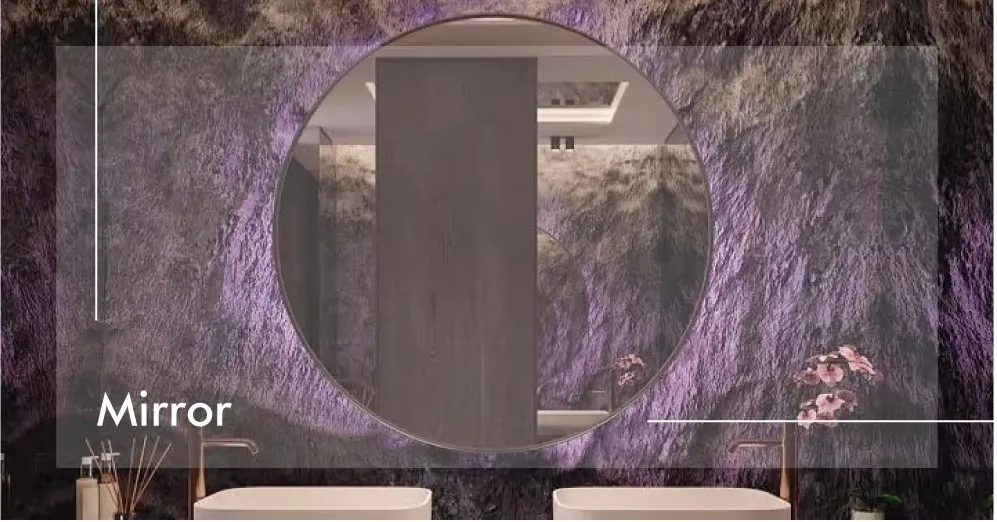
When we walk into modern office lobbies, trendy restaurants, or vibrant play areas, we're often greeted by stunning mirrored surfaces that transform spaces. But beyond just looking sleek and sophisticated, there's a hidden safety story that matters more than aesthetics - especially where kids are involved or crowds gather. Standard mirrors can be accidents waiting to happen, but safety back-painted mirrors solve these problems elegantly.
Imagine this: a bustling hotel lobby where polished surfaces reflect light beautifully. Suddenly, someone bumps into a
mirror and it shatters into dangerous shards. Or picture a children's playroom where curious little hands meet sharp
mirror edges. These scenarios happen more than you'd think. According to OSHA data, falls, slips, and trips are consistently among the leading causes of workplace injury - and fragile reflective surfaces contribute to these hazards.
Sharp Edges:
Standard
mirror edges aren't usually bevelled or softened, creating cutting hazards
Fragility:
Regular mirrors can shatter from impact into dangerous glass daggers
Poor Visibility:
Reflective surfaces can create confusing depth perception in busy areas
Installation Risks:
Mounting requires exposed fasteners that can snag clothing
"What people don't realize is that in commercial settings, every surface has a safety responsibility," notes a building safety consultant who worked with OSHA guidelines. "We treat railings and
flooring carefully, but forget that mirrors are part of the hazard prevention ecosystem. Back-painted mirrors meet that need seamlessly – they're the quiet safety heroes of interior design."
So how do safety back-painted mirrors actually work? It's a brilliantly simple but layered approach:
At their foundation, these specialized mirrors start with tempered safety glass - the same stuff used in car windshields. This glass undergoes intense heating followed by rapid cooling, creating internal tension. When impacted, it doesn't shatter into sharp pieces but crumbles into harmless pebble-like chunks. Think about how crucial this is in a daycare center collision versus having glass knives flying toward children.
The "back-painted" part refers to more than just color. An industrial-grade epoxy coating gets applied to the backside that's as much about structural reinforcement as aesthetics. This coating bonds with the glass, creating a unity that resists vibration stress and spreading impacts across the whole surface rather than letting cracks propagate. Picture how a well-designed wall system creates strength through integration – it's that same principle on a smaller scale.
Here's where ordinary mirrors usually cut corners (literally). Safety versions feature soft silicone edging that wraps completely around the perimeter. Not only does this provide impact cushioning if someone bumps into it, but it eliminates sharp exposed edges that could slice skin. The edging comes color-matched so it disappears visually but delivers protection where people and surfaces actually interact.
Beyond the obvious hospitality industry examples, consider how many businesses use mirrors strategically:
• Fitness centers use wall-to-wall mirrors for form correction
• Retail stores employ mirrored columns to create space illusions
• Restaurant restrooms feature full-length mirrors
• Corporate lobbies incorporate artistic mirrored installations
In all these high-traffic environments, OSHA’s hazard control hierarchy applies perfectly to
mirror safety:
1.
Elimination:
Can we remove the hazard? (Not if reflections are functional)
2.
Substitution:
replace with less hazardous option (Safety back-painted mirrors)
3.
Engineering Controls:
Design inherent safety into the product (Tempered glass + coating)
4.
Administrative Controls:
Training/guidelines about
mirror areas
5.
PPE:
Least desirable last resort
"Many business owners hesitate at the 10-15% cost premium for safety mirrors until they see a liability claim calculation," notes a commercial insurance advisor. "A single
mirror-related injury claim averages $35,000 in medical plus legal costs. Even small businesses can't afford to economize on safety-critical surfaces when alternatives exist."
When a boutique fitness studio upgraded its aging facilities, they replaced standard bathroom mirrors with custom-cut back-painted mirrors featuring integrated antimicrobial coating – perfect for their post-workout cleanup spaces. Within months, two incidents occurred that validated the investment: A dropped weight plate shattered a
mirror near treadmills without releasing sharp shards, and a client tripped into a
full-length mirror resulting in no injuries beyond a bruise. The management estimates the premium for safety mirrors paid for itself potentially 20 times over in avoided harm.
Preschools, pediatric clinics, and play areas face unique
mirror safety challenges. Kids interact with surfaces differently – poking, tapping, leaning, and sometimes bumping at unpredictable angles. Safety back-painted mirrors solve multiple child-specific hazards:
Curiosity-Driven Testing:
Safety glass crumbles instead of sharding when hit
Height-Appropriate Placement:
Custom sizing prevents climbing temptation
Germ Resistance:
Non-porous surface allows disinfectant cleaning
Visual Stimulation:
Critical for cognitive development without safety compromises
The magic happens in those accidental moments when a runaway toy truck hits a
mirror or an exuberant dance move brings a child shoulder-first into the reflective surface. Whereas traditional mirrors might have created a crisis, the protective layers absorb the energy and contain potential harm. These mirrors are built for real-world kid energy rather than theoretical perfection.
Child psychologists emphasize that environments balancing safety with sensory engagement promote healthy development. A brightly colored back-painted
mirror in a therapy room invites interaction while eliminating worry. Montessori schools particularly benefit from floor-level safety mirrors that let toddlers observe themselves safely during movement activities. The combination of impact-resistant materials, soft edging, and often rounded corners creates a haven where adults don't constantly say "don't touch that
mirror!"
Unlike the "beige safety" stereotypes, modern safety mirrors offer surprising design versatility:
•
Color Freedom:
Back-painting comes in any RAL or Pantone color for integration with branding
•
Custom Shapes:
Cutting tempered glass allows circles, arches, and organic silhouettes
•
Integrated Lighting:
Hidden perimeter LED systems create stunning effects
•
Textured Options:
Acid-etched patterns or geometric designs add tactile dimension
This lets architects and designers meet aesthetics expectations without negotiating on safety fundamentals. Whether creating an accent wall in a restaurant or a whimsical installation in a children's museum, the safety features become invisible to users while protecting them constantly.
Safety systems degrade without proper care, so maintaining back-painted mirrors is crucial:
Use only non-abrasive cleaners. Ammonia-based solutions damage the backing over time. Microfiber cloths prevent scratches. For childcare settings, EPA-approved disinfectants are safe for daily use.
Facility managers should implement quarterly inspections:
• Check for edge separation indicating adhesive failure
• Look for impact stars indicating hidden damage
• Verify fasteners haven't loosened
• Ensure lighting elements function properly
Well-maintained safety mirrors can last decades. A famous theater lobby in Chicago has maintained their original custom back-painted mirrors since 1996 with only minor touch-ups, proving that these surfaces age beautifully.
While OSHA standards don't specifically mandate
mirror types, they set performance requirements that back-painted safety mirrors address comprehensively:
General Duty Clause (Section 5(a)(1)):
Requires workplaces free of recognized hazards
1910.23(b)(1):
Guards on walking surfaces near dangerous edges
1910.95(i)(2):
Sound reflection considerations in noisy areas
1910.303(b)(2):
Lighting regulations affecting reflection qualities
In children's facilities, additional CPSC guidelines and ASTM F1487 standards on impact attenuation make safety mirrors essential. The layers of protection in back-painted systems meet these thresholds far beyond standard
mirror installations.
"We started specifying back-painted safety mirrors after seeing emergency room statistics from
mirror injuries in schools," shares a facility planning director for a major school district. "It's not just about preventing catastrophic events - it's eliminating hundreds of minor cuts and bruises that distract kids from learning and create liability nightmares."
When decision-makers compare quotes, the safety
mirror premium seems obvious. But true value includes:
• Reduced insurance premiums through certified safety installations
• Lower replacement costs from damage-resistant materials
• Elimination of temporary barriers warning people away from mirrors
• Accessibility compliance achieved without ugly adaptations
• Energy savings from carefully engineered reflections boosting ambient light
These factors transform what initially looks like a luxury upgrade into a surprisingly practical investment. Over 5-10 years, most facilities find back-painted safety mirrors deliver lower total cost than repeatedly replacing standard mirrors damaged through daily life.
Tempered glass is infinitely recyclable, making safety mirrors an environmentally responsible choice. Manufacturers increasingly use recycled glass in production, and the durable surfaces avoid frequent replacements that fill landfills. This resonates powerfully with organizations pursuing sustainability certifications like LEED.
As emerging technologies integrate with reflective surfaces, safety remains non-negotiable:
•
Smart Mirrors:
Touchscreen capabilities require laminated layers already inherent in safety designs
•
HUD Integration:
Digital projections onto mirrors benefit from distortion-free surfaces
•
Health Monitoring:
Future fitness mirrors detecting vitals need sturdy foundations
The back-painted safety
mirror approach provides a platform ready for innovation without sacrificing protection. The fundamental design – multiple layers creating unified safety – is perfect for tomorrow's applications.
Ultimately, whether designing a corporate headquarters or kindergarten classroom, the surface decisions matter. Walls that incorporate these innovative mirrors transform spaces through light and reflection while quietly protecting everyone who interacts with them. The choice becomes clear: why install anything less than the safest possible surfaces when technology now allows beauty and protection to coexist effortlessly?
In the journey toward truly safe spaces that combine function with well-being, back-painted safety mirrors represent more than just interior decor – they demonstrate how thoughtful material selection creates environments where people flourish without unnecessary risk. From preventing workplace incidents to letting children explore their world safely, these mirrors reflect our highest values: protection without compromise.