
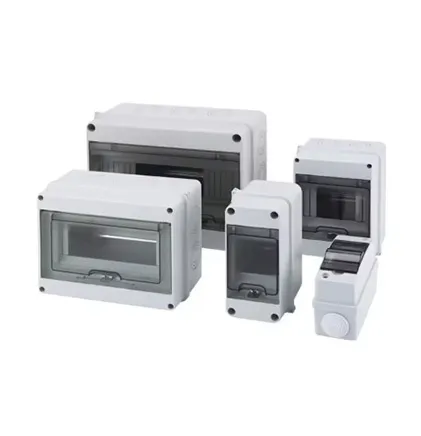
Ever woken up to flickering lights? Or had that scary moment when an outlet sparks? That's your electrical system waving a red flag. Think of your distribution box as the vigilant security guard of your home's power – the unsung hero that stands between safety and disaster. This guide isn't just technical talk; it's about peace of mind for your family and protecting your biggest investment.
Picture this: You've got one main power line feeding your house, but hundreds of things need electricity. How do you safely split that power? Enter the distribution box – your electrical system's command center. Known also as a breaker panel or fuse board, it does the heavy lifting of dividing incoming electricity into safe pathways.
Modern boxes are packed with protective features: circuit breakers that flip off during dangerous overloads, special detectors that sense shock hazards, and surge protectors that shield your pricey electronics.
Electrical dangers aren't just nuisances – they're house fire starters and silent killers. Here's what proper protection stops:
Those ancient fuse boxes? They're ticking time bombs. Unlike modern breakers that reset after fixing a problem, fuses blow permanently, tempting dangerous DIY "fixes" with foil or pennies. Not to mention they can't detect dangerous ground faults. Homes built before the 1980s? Consider this your urgent wake-up call.
(Small homes with appliances you count on one hand)
Needs: 1 main breaker + 4-6 circuits. Ideal: 1P+N breakers for basic outlets/lights + one heavy-duty 2P for appliances like your AC or water heater.
(Three bedrooms, home office, gaming setups)
Needs: Dedicated circuits per bedroom/room + separate paths for major appliances. Waterproof design near wet zones. Look for spaces to add later circuits.
(Home workshops, big kitchens, pools/jacuzzis)
Needs: Heavy-duty commercial-grade panel. Industrial SPDs, separate feeder panels for high-draw areas. Three-phase power potential.
When comparing breakers, think about isolation levels:
That suspiciously cheap no-name box? It might not survive a real emergency. Look for logos you can trust:
When considering building materials and electrical equipment for your home, always prioritize certified safety components.
Swapping a breaker? Maybe. Installing or upgrading your whole box? Absolutely NOT. This is complex, dangerous work involving live wires.
Pro Tip: Your electrician isn't just installing boxes – they're calculating your home's precise power demands, ensuring safe wire sizing, and checking that grounding system (literally your life-saver). Skipping this could render even the best box useless.
Mark's "money-saving" fuse box replacement led to melted wires behind his fridge circuit.
Priya almost lost her home studio equipment because her basic surge protector failed during a storm.
The Takeaway? Skimping here risks everything.
Like smoke detectors, your box needs checks:
Final Thought: This Isn't Just a Box.
It's the barrier between your loved ones and invisible danger. Investing in proper overload and short-circuit protection means investing in nights free from worry, knowing that unseen guardian has your back. Don't wait for disaster – upgrade to safety.
Recommend Products












