
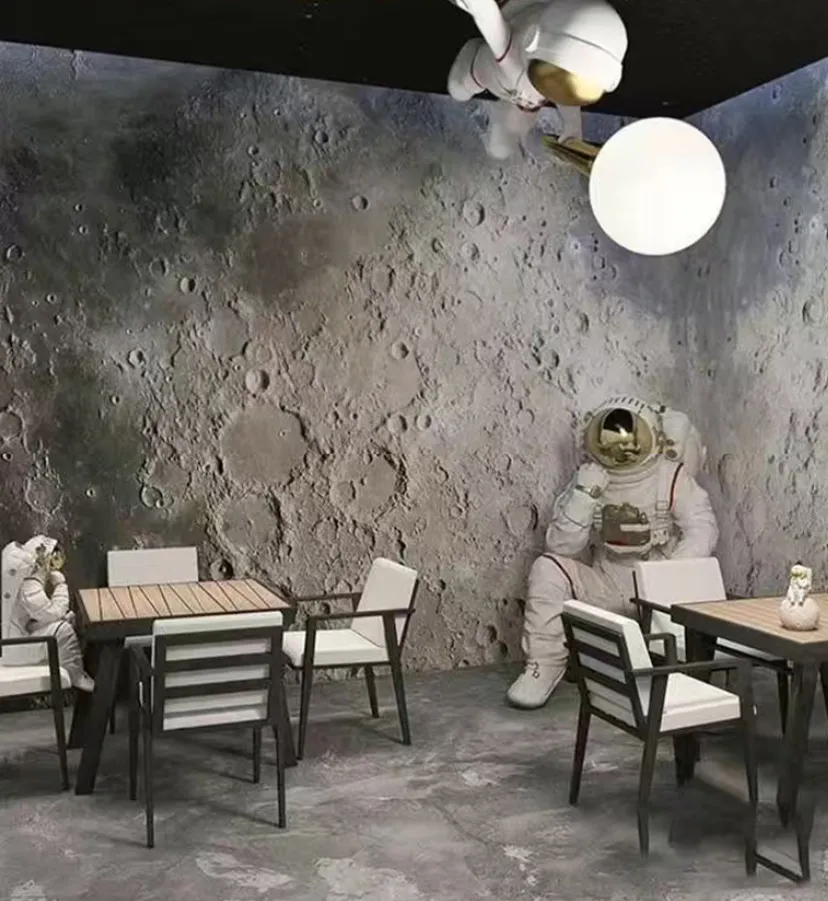
Have you ever run your fingers across a stone and wondered about its journey through time and space? Imagine holding a piece of the Moon itself - a cosmic traveler that witnessed the birth of our solar system. As we explore the world of lunar geology, you'll discover how these celestial fragments can transform ordinary spaces into extraordinary sanctuaries.
Moon rocks aren't just scientific curiosities; they're nature's artistry suspended in vacuum-hardened perfection. Whether you're renovating a modern minimalist office or crafting a cosmic-inspired bathroom retreat, these ancient stones carry whispers of interstellar history that resonate in contemporary design.
Born from the Moon's volcanic adolescence 3-4 billion years ago, these iron-rich stones blanket the lunar "seas." When sunlight kisses their charcoal surfaces, microscopic minerals shimmer like captured stardust. Picture a feature wall in your entryway where textured basalt slabs catch the morning light - each fissure telling tales of ancient lava flows that shaped our celestial neighbor.
Renovation Tip: Their dense structure makes them surprisingly resilient countertops. Pair with integrated LED lighting to mimic how they'd glow under Earthlight.
These pale beauties formed the Moon's primordial crust, floating atop an ocean of magma like delicate froth. Their pearlescent surfaces contain plagioclase crystals that scatter light like diamond dust. Consider them for bathroom niches where their soft luminescence creates spa-like serenity.
Fun Fact: At 4.6 billion years old, anorthosite contains minerals so ancient they predate all Earth rocks. Imagine adding fossils from before terrestrial life existed!
When meteorites collide, they create nature's mosaic masterpieces. Breccias bind together shattered rock fragments with molten glue, creating abstract art frozen in time. Each fragment holds clues to the Moon's violent history - perfect for statement fireplace surrounds where their fragmented beauty tells stories of celestial collisions.
Design Suggestion: Backlight thinner slices to reveal hidden mineral patterns, creating living astronomy charts for wall installations.
These enigmatic stones, rich in potassium, rare earth elements, and phosphorus, form only in special lunar pockets. Their unique chemistry creates swirling caramel and rust patterns that look like captured nebulae. Ideal for luxury countertops or floating shelves where their rarity sparks conversation.
Authenticity Tip: Genuine KREEP samples display distinctive "orange glass" inclusions - tiny beads formed by volcanic fountains during the Moon's fiery youth.
Every lunar fragment carries a geological resume spanning billions of years. Apollo mission basalts (collected 1969-1972) radiate human achievement, while robotic mission samples symbolize technological triumph. Display them with miniature plaques sharing their cosmic journey dates.
Vacuum-formed regolith creates surfaces unlike any Earth stone. Run your fingers along vesicular basalt - it's both porous and glassy, creating a unique tactile experience. For high-touch areas like handrails or table tops, seek stones with dramatic vesicle patterns that invite touch.
Anorthosite's cool greys calm bedrooms, while basalt's deep charcoals anchor modern kitchens. Breccia adds dynamic energy to entertainment spaces with its fragmented contrasts. Match stone hues to your emotional goals for each room.
Despite their exotic origins, moon rocks function like granite or marble with extra care. Seal vesicular stones to protect their delicate structures. Avoid acidic cleaners that cloud their crystalline surfaces. Remember - these stones haven't weathered Earth's rains and winds, so preserve their cosmic purity.
A basalt accent wall behind your bed becomes a canvas of cooled lava flows, its iron minerals catching light like microscopic mirrors. For small spaces, narrow anorthosite tiles arranged vertically create the illusion of soaring height - a nod to the lunar highlands.
For those passionate about bathroom wall tiles , consider installing moon rock mosaics as shower niches where steam reveals hidden mineral details.
Breccia countertops transform kitchen prep into geological exploration. Each chopped vegetable lands on surfaces containing meteorite-fused minerals older than multicellular life. Use clear resin fills for vesicular stones, preserving craters while creating smooth functional surfaces.
Create walking paths of basalt pavers alternating with metallic tiles mimicking lunar module footprints. For sensory experiences, incorporate regolith-textured sections through polished concrete additives that replicate the feel of moon dust underfoot.
Float thin-sliced anorthosite as luminous shelf tops backlit with adjustable LEDs. Embed small KREEP specimens in clear acrylic bar tops where their rare earth elements fluoresce under UV lighting, creating private auroras for evening gatherings.
With only 382 kg of lunar material on Earth, ensure your stones come with authenticated certification trails. Reputable dealers provide sample numbers traceable to NASA repositories. Consider synthetic alternatives that replicate lunar textures through advanced mineral casting - nearly indistinguishable visually but vastly more accessible.
Remember: each genuine fragment represents humanity's greatest exploratory achievement. Treat them with reverence they deserve, not mere construction materials.
Moon rocks in home design transcend trends - they're eternal connections to our cosmic neighborhood. As you touch that cool basalt surface in your kitchen, remember you're contacting something formed before complex life evolved on Earth. These stones transform houses into vessels of wonder, where daily rituals connect to the grand dance of celestial bodies.
Your renovation becomes more than aesthetic refreshment; it's an ongoing conversation between human habitation and cosmic history. So when choosing your lunar companion, ask not just "how it looks" but "what story does it want to tell?" The answer might just redefine what home means to you.
Recommend Products












